The American city serves as a complex laboratory of sociology, architecture, and economic history. Unlike the ancestral centers of Europe, which often evolved around singular medieval cores, the premier metropolitan hubs of North America are products of rapid industrial acceleration, mass migration, and deliberate grid-iron engineering. To engage with these environments through the lens of a high-threshold tour is to do more than observe landmarks; it is to analyze the structural forces that shaped the Western Hemisphere’s most influential nodes. The modern traveler must navigate a landscape where historical preservation constantly negotiates with vertical densification, creating a unique tension that defines the urban experience.
As we move deeper into 2026, the criteria for evaluating metropolitan centers have shifted. Traditional metrics of “sightseeing” are being replaced by “systemic immersion.” The discerning visitor is no longer satisfied with a superficial viewing of a skyscraper; they seek to understand the zoning laws that allowed its height, the ethnic enclaves that fueled its labor force, and the transit networks that maintain its pulse. This shift requires a more rigorous approach to itinerary construction—one that prioritizes the “metabolic” understanding of a city over a mere checklist of attractions.
The selection of a destination is, therefore, a strategic decision in resource allocation. Each city offers a different “intellectual yield.” Whether it is the federalist geometry of Washington, D.C., the vertical gothic density of Chicago, or the multi-layered colonial palimpsest of New Orleans, the choice of location dictates the narrative of the journey. This article provides a definitive reference for those who view urban exploration as a serious pursuit of knowledge, offering a structural framework for identifying and engaging with the most significant metropolitan environments in the United States.
Premier city tour destinations in America
To define premier city tour destinations in America, one must look beyond population density or commercial volume. A premier destination in this context is a city that offers “Interpretive Depth”—a location where the physical environment provides a legible record of significant historical, cultural, or architectural movements. Many travelers mistakenly conflate “famous” with “premier.” A city might be famous for its nightlife or a single monument, but a premier touring destination must possess a multi-layered narrative that can sustain deep, multi-day investigation without falling into repetitive tropes.
One of the most significant oversimplification risks in identifying these destinations is the “Coast-Centric Bias.” While New York and Los Angeles are undeniable global nodes, they are often so saturated with “tourist theater” that extracting an authentic systemic understanding requires extreme effort. Conversely, cities like Chicago or Philadelphia often provide a more accessible “structural legibility.” In Chicago, for example, the history of the modern skyscraper is physically documented in a walkable core, allowing a tour to function as a chronological lecture in engineering.
Furthermore, the concept of a “premier” destination must account for “Infrastructural Resilience.” A city that is architecturally significant but lacks the transit or safety systems to support deep exploration fails the criteria. The premier centers are those that have invested in the “Last-Mile” experience—ensuring that the transition from a federal museum to a localized ethnic enclave is seamless and logistically sound. Identifying these hubs requires an analytical gaze that weighs aesthetic value against operational viability, ensuring the tour is a cohesive intellectual exercise rather than a series of disconnected logistical hurdles.
Deep Contextual Background: The Evolution of the American Metropolis
The American city is a relatively young organism. Its evolution can be categorized into four distinct systemic eras: the Colonial Seaport, the Industrial Rail-Hub, the Automotive Sprawl, and the modern Digital-Knowledge Node. Each of these eras left a physical “sediment” that travelers can still observe today.
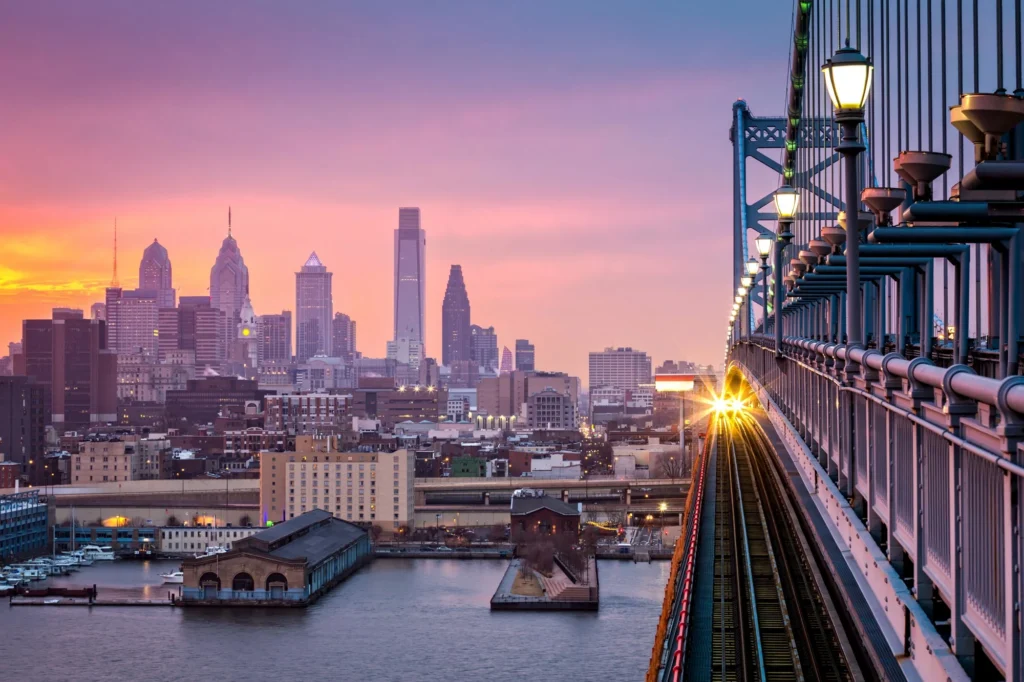
In the 18th century, cities like Boston and Charleston were designed for maritime connectivity, resulting in narrow, winding streets and a focus on the waterfront. The 19th century introduced the “Great Grid,” most notably in Manhattan’s 1811 plan, which prioritized real estate efficiency and rationalized the landscape for the Industrial Revolution. By the mid-20th century, the “Automotive Pivot” radically altered cities like Los Angeles and Houston, introducing the freeway as the primary architectural feature. Today, the premier destinations are those that are “re-urbanizing”—reclaiming industrial waterfronts (Brooklyn, Seattle) and repurposing rail infrastructure (The High Line, Atlanta BeltLine) to create a new layer of 21st-century urbanism. Understanding this evolution is essential for any traveler seeking to decode the current state of these cities.
Conceptual Frameworks and Mental Models for Urban Analysis
To extract the most value from an urban tour, the traveler should apply these three structural mental models:
-
The Palimpsest Effect: View the city as a piece of parchment that has been written on, erased, and rewritten. Look for where the “old writing” (colonial foundations) still bleeds through the “new writing” (glass towers). This is particularly effective in cities like Philadelphia or Boston.
-
The Hub-and-Spoke Logistics Model: Analyze how the city’s transit (or lack thereof) dictates the social and economic status of its neighborhoods. A tour that follows a subway line or a historic tram route provides a built-in narrative of the city’s growth.
-
The Zoning-as-Architecture Model: Understand that a city’s skyline is not just a collection of buildings, but a visual representation of its legal code. The setbacks of New York skyscrapers, for example, are a direct result of the 1916 Zoning Resolution.
-
The Cultural Metabolism Model: Observe how the city “consumes” and “digests” new populations. The transition from a Jewish tenement district to a Chinese enclave to a gentrified tech hub is a vital sign of a city’s health.
Key Categories of Urban Environments and Operational Trade-offs
When selecting among premier city tour destinations in America, it is helpful to categorize them by their dominant “Narrative Engine.”
| Category | Primary Narrative | Representative Cities | Trade-off |
| The Power Centers | Federalism, Geopolitics, Neoclassicism | Washington D.C., Ottawa | Rigid logistics, high security friction |
| The Industrial Titans | Engineering, Verticality, Modernism | Chicago, Detroit, Pittsburgh | Variable climate, pockets of decay |
| The Cultural Melting Pots | Immigration, Jazz, Culinary Arts | New Orleans, Miami, New York | Extreme density, high noise/sensory load |
| The Tech & Innovation Hubs | Post-Industrialism, Sustainability | Seattle, San Francisco, Austin | High cost of entry, rapid gentrification |
| The Colonial Foundries | Revolution, Maritime History | Boston, Savannah, Charleston | Difficult navigation, seasonal congestion |
| The Automotive Landscapes | Mid-Century Modernism, Sprawl | Los Angeles, Phoenix, Dallas | Heavy reliance on private transport |
Decision Logic:
The seeker of “legibility” should prioritize Chicago or Washington, D.C. The seeker of “vibrancy” and “human friction” should prioritize New Orleans or New York. The trade-off is always between Structural Order and Organic Chaos.
Detailed Real-World Scenarios
Scenario 1: The Architectural Chronology of Chicago
A traveler focuses on the “Loop” to trace the history of steel-frame construction.
-
The Tour: Moving from the load-bearing masonry of the Monadnock Building to the modernist glass of the Willis Tower.
-
Constraint: Requires a specialized “Structural Guide” to explain the engineering behind the aesthetics.
-
Failure Mode: Ignoring the weather; the “wind tunnel” effect between skyscrapers can halt walking tours in winter.
Scenario 2: The Federal Geometry of D.C.
An investigation into the L’Enfant Plan and the symbolic power of the National Mall.
-
The Tour: Analyzing the height restrictions that keep the city “horizontal” and the diagonal avenues that create complex intersections.
-
Logistics: Heavy reliance on walking and the “Circulator” bus; high degree of security checkpoints in the “Golden Triangle.”
Planning, Cost, and Resource Dynamics
Urban touring in America is an exercise in “Micro-Economics.” Costs are rarely flat; they are highly sensitive to the “Location Premium.”
Table: Comparative Daily Expenditures for Premier Hubs
| Expense Category | New York City (High Density) | New Orleans (Leisure) | Washington D.C. (Institutional) |
| Lodging (4-Star) | $450 – $700 | $250 – $400 | $300 – $500 |
| Internal Transit | $30 (Subway/Taxi) | $15 (Streetcar/Walk) | $20 (Metro) |
| Expert Guide (Daily) | $600 – $1,200 | $400 – $800 | $500 – $900 |
| Museum/Site Fees | $25 – $40 per site | $20 – $35 per site | $0 (Smithsonian-heavy) |
Indirect Costs:
The “Cost of Friction” in New York (time lost in traffic) often outweighs the “Cost of Entry.” In contrast, D.C. offers high value through free federal institutions but has high “Security Wait Times” that eat into the day’s schedule.
Tools, Strategies, and Support Systems
-
Specialized GIS/Mapping Apps: Using tools that show “Historic Overlays” to see what stood on a site 100 years ago.
-
Architectural Guilds: Booking tours through organizations like the AIA (American Institute of Architects) for higher intellectual rigor.
-
Transit Optimization Tools: Utilizing apps that predict “Commuter Load” to avoid peak-hour transit saturation.
-
Acoustic Noise-Canceling Support: Essential for maintaining focus during tours in high-density zones like Midtown Manhattan.
-
Private Pedicab/Electric Cycles: A middle-ground between walking and cars for cities like Savannah or Austin.
-
Restaurant Reservation Aggregators: In premier cities, “Culinary Voids” can ruin a schedule; pre-securing table turnover is a core logistical task.
The Risk Landscape: Urban Friction and Failure Modes
-
The “Museum Fatigue” Threshold: Planning too many static indoor exhibits without “Street-Level” decompression, leading to cognitive shutdown.
-
The Gentrification Blindness: A tour that ignores the social displacement around it misses the “True Narrative” of the city.
-
The Connectivity Gap: Relying on GPS in “Urban Canyons” (like Chicago or NYC,) where signal bounce makes navigation unreliable.
-
The Seasonal Chokepoint: Visiting New Orleans during Mardi Gras or D.C. during Cherry Blossom season, where the crowd density makes structural touring impossible.
Governance, Maintenance, and Long-Term Adaptation
Organizations and individuals should treat urban touring as an evolving curriculum.
-
Monitoring Trends: Tracking which neighborhoods are undergoing “Adaptive Reuse” (e.g., the Meatpacking District in NYC or the Pearl District in Portland).
-
Review Cycles: Updating itineraries every 24 months, as urban landscapes change faster than rural ones.
-
The Urban Tour Checklist:
-
Verified transit “Pass” for all modes?
-
Confirmed “Anchor Reservation” for mid-day decompression?
-
Acoustic and sensory protection (earplugs/sunglasses)?
-
Historical overlay maps loaded for offline use?
-
Measurement, Tracking, and Evaluation
-
Leading Indicators: The guide’s academic credentials; the ratio of “Private vs. Public” access in the itinerary.
-
Lagging Indicators: “Knowledge Retention” post-trip; “Distance Covered” without physical exhaustion.
-
Documentation: Maintaining an “Urban Journal” that records the “Sensory Profile” of each neighborhood—smells, sounds, and light quality—to compare cities over time.
Common Misconceptions and Systemic Myths
-
“New York is the only ‘real’ city”: Myth. Many smaller cities (Savannah, Santa Fe) offer much deeper historical legibility because they weren’t razed for 20th-century development.
-
“Public transit is dangerous”: Myth. In premier cities, the transit system is the “Arterial Network” of the culture; avoiding it means missing the city’s true character.
-
“Chain hotels are the safest bet”: Myth. Boutique hotels in historic districts often provide a more “Contextual Stay” that enhances the tour.
-
“The ‘Best’ sites are the ones with the longest lines”: Myth. Often, the most profound urban insights are found in public libraries, cemeteries, or secondary parks with no entry fee.
Ethical and Practical Considerations
Touring an American city requires “Social Intelligence.” One must be aware of the “Tourism-Resident Tension.” Premier destinations are not theme parks; they are living ecosystems. Practically, this means avoiding “poverty tourism” in distressed neighborhoods and instead supporting local businesses and cultural centers that contribute to the neighborhood’s resilience. Ethically, the traveler should aim to be a “Low-Impact/High-Engagement” visitor.
Conclusion: Synthesis and Strategic Adaptability
The pursuit of premier city tour destinationin Americaca is ultimately a pursuit of the American story itself. Each city is a chapter, written in stone, steel, and glass. To navigate these environments successfully, one must be a “Systemic Reader”—someone who looks at a bridge and sees a political triumph, or looks at a park and sees a social movement. By applying rigorous analytical frameworks, managing logistical friction, and embracing the organic complexity of the metropolis, the traveler ensures that their urban journey is not just a vacation but a profound expansion of their understanding of the modern world.