In the contemporary travel landscape, the term “luxury” has undergone a significant semantic shift. No longer solely defined by the opulence of thread counts or the shine of gold leaf, true luxury in the American context has transitioned toward the acquisition of time, silence, and unparalleled access. This evolution reflects a broader societal movement where the affluent traveler prioritizes “experiential capital” over material consumption. The challenge for the modern excursion lies in navigating the vast, often saturated market of the United States to identify experiences that offer genuine systemic depth rather than mere aesthetic polish.
The American continent, with its varied topography and complex regulatory environment, presents a unique canvas for these high-level engagements. From the private aviation corridors over the Southwest to the curated intellectual archives of the Northeast, the infrastructure of luxury is often invisible, operating within the “seams” of public and private life. To orchestrate a successful high-end excursion requires more than financial liquidity; it demands an understanding of the logistical frameworks, permitting structures, and ecological constraints that govern rare access.
This analysis serves as a definitive reference for those seeking to move beyond the superficial “top ten” lists. It examines the structural realities of high-end transit, the mental models required to evaluate the validity of an experience, and the rigorous frameworks necessary for maintaining operational excellence. By treating travel as a disciplined exercise in resource allocation and risk management, one can ensure that the investment of time yields a return of profound situational awareness and cultural enrichment.
Best luxury excursions us
To define the best luxury excursions us, one must first dismantle the conflation of “expensive” with “luxurious.” An excursion qualifies for this designation when it provides a service or access that is fundamentally scarce. This scarcity might be temporal—visiting a national landmark at a time when the general public is excluded—or it might be intellectual, such as an expedition led by a scholar whose knowledge provides a layer of interpretation unavailable to the standard visitor.
A common misunderstanding in this sector is the belief that a high-priced tour package inherently resolves logistical friction. In reality, the more complex an excursion becomes, the more points of failure it introduces. For instance, a private helicopter tour over the Grand Canyon is subject to the same Federal Aviation Administration (FAA) noise-mitigation protocols as any other flight. The “best” version of this experience is not simply the one with the most comfortable seats; it is the one that has secured the most optimal “landing rights” or “flight corridors” through years of bureaucratic negotiation.
Oversimplification in this domain leads to “generic luxury”—experiences that look impressive on social media but lack systemic substance. A truly high-end excursion involves the removal of the “audience effect.” It is the ability to engage with a site, whether it is a private ranch in Montana or a closed-door viewing of a historical archive, in a state of total immersion. Mastering the best luxury excursions us means recognizing that the ultimate luxury is the absence of the crowd and the presence of specialized expertise.
Deep Contextual Background: The Evolution of High-End Travel
The lineage of the American luxury excursion can be traced back to the “Private Car” era of the late 19th century. Industrialists like Rockefeller and Vanderbilt did not merely travel; they brought their environment with them, commissioning custom Pullman cars that functioned as mobile estates. This era established the foundational principle of American luxury: the decoupling of the traveler from the public infrastructure. While the masses traveled in standardized coaches, the elite utilized the same tracks but operated within a different social and physical reality.
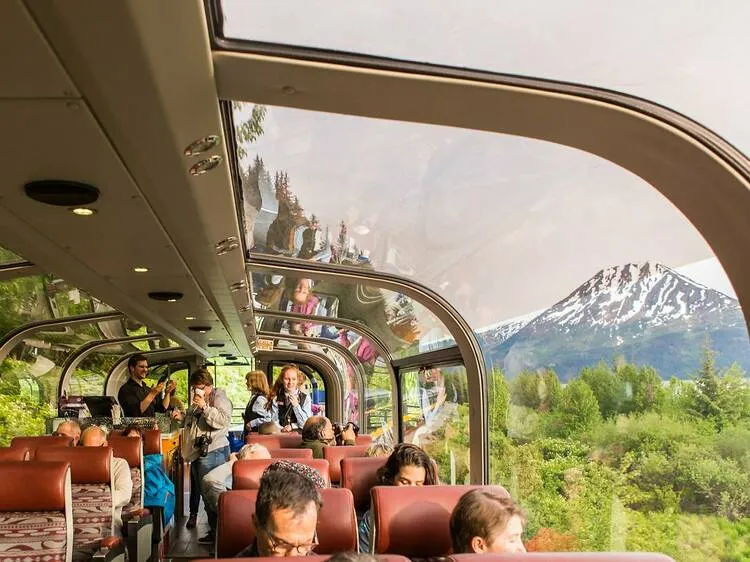
Following the mid-century expansion of the interstate highway system and the democratization of flight, exclusivity retreated into private aviation and gated enclaves. The 1990s marked the birth of the “concierge economy,” where the focus shifted from the vessel of transport to the facilitation of access. Today, we are in the era of “Deep Immersion.” The modern luxury excursion leverages data and local social capital to bypass the bottlenecks of over-tourism.
This historical trajectory shows that as public landmarks become more congested, the value of the “exclusive gatekeeper” rises. The evolution has moved from the purely physical (the private train car) to the purely logistical (the private permit and the specialized guide). Understanding this evolution is crucial for evaluating modern offerings, as it allows the traveler to distinguish between a service that is merely “upscale” and one that is truly “systemically exclusive.”
Conceptual Frameworks and Mental Models
When evaluating high-end excursions, several mental models from logistics and economics can be applied to ensure the experience meets the required standard:
-
The Scarcity Loop: This model suggests that the value of an excursion is inversely proportional to its visibility. If an experience is widely advertised, its “exclusivity” is likely compromised. The highest tier of excursions often operates via referral and private networks.
-
The Friction-Coefficient: This measures how many “unmanaged” interactions a traveler has with the public. A high-coefficient excursion means you are still standing in lines, even if those lines are shorter. A low-coefficient excursion represents a seamless, “behind-the-scenes” flow.
-
The Knowledge-Density Ratio: This evaluates the depth of the guide’s expertise relative to the environment. A luxury excursion in a historical setting is only as good as the guide’s ability to provide non-obvious, primary-source information.
-
The Opportunity Cost of Time (OCT): For high-net-worth individuals, the primary cost of an excursion is the time spent. An excursion that saves four hours of transit through the use of a private charter is often more valuable than one that offers a more elaborate meal but takes twice as long.
Key Categories and Operational Trade-offs
Luxury excursions in the U.S. generally bifurcate into several operational categories, each presenting a different set of trade-offs between access, comfort, and risk.
| Category | Primary Asset | Trade-off | Logistical Burden |
| Aviation-Led | Speed and Vantage | Weather Dependency | Extreme (FAA/Pilot) |
| Private Land Access | Isolation/Privacy | Remote Infrastructure | High (Self-Sustaining) |
| Institutional/Expert | Deep Intellectual Access | Rigid Time Windows | Moderate (Bureaucratic) |
| Marine/Charter | Coastal Seclusion | Seasonal Limitations | High (Maritime Law) |
| Bespoke Adventure | Physical Achievement | Health/Safety Risk | Extreme (Medical/Rescue) |
Decision Logic:
Choosing the correct category depends on the desired outcome. If the goal is Visual Scarcity, aviation-led or private land excursions are superior. If the goal is Cerebral Scarcity, institutional access (e.g., a private tour of a NASA facility or a closed wing of a museum) provides the highest return.
Detailed Real-World Scenarios
Scenario 1: The Canyonlands Private Landing
A group seeks to explore the remote corners of the Utah desert. The standard approach involves a long drive and a crowded overlook.
-
The Luxury Intervention: A private helicopter departs from a dedicated FBO (Fixed Base Operator), utilizing a “private landing permit” on an indigenous or private ranch bordering the National Park.
-
Failure Mode: High-density altitude or sudden thermal winds can ground the flight.
-
Second-Order Effect: The use of the private landing avoids the 2-hour queue at the park entrance, effectively adding a half-day of productive time to the itinerary.
Scenario 2: The After-Hours Museum Archive
A traveler with a specific interest in American history wants to view documents not on public display.
-
The Luxury Intervention: Working through a philanthropic or academic intermediary to secure a private session with a senior curator.
-
Constraint: The logistical “window” is often narrow (e.g., Tuesday mornings between 7:00 AM and 9:00 AM).
-
Second-Order Effect: The intellectual depth gained from a one-on-one dialogue with a curator far exceeds the value of a standard “VIP” tour that only grants front-of-line access to public galleries.
Planning, Cost, and Resource Dynamics
The financial structure of the best luxury excursions us is characterized by high fixed costs (permits, charters) and variable costs related to customization.
Table: Range-Based Cost Analysis (Per Day, 2–4 Persons)
| Tier | Direct Costs | Typical Resource Allocation | Value Driver |
| Tier 1: Access | $3k – $7k | Private SUV + Expert Guide | Efficiency & Insight |
| Tier 2: Aerial | $10k – $25k | Charter Heli + Field Support | Speed & Perspective |
| Tier 3: Bespoke | $50k+ | Private Land Lease + Full Staff | Total Privacy |
The “Hidden Costs” often include the “re-protection” fees. In high-end logistics, one must often pay to keep a backup option active (e.g., having a private car on standby even if a helicopter is the primary mode) to ensure the itinerary remains intact regardless of external variables.
Tools, Strategies, and Support Systems
-
FBO Networks: Utilizing private terminals to bypass the security and logistical bottlenecks of commercial aviation.
-
Specialized Permit Expeditors: Professionals who navigate the often opaque “Commercial Use Authorization” (CUA) systems of the National Park Service.
-
Local “Fixers”: Individuals who possess the social capital to negotiate access to private estates or ranches that are not on the open market.
-
Satellite Connectivity (Starlink/Garmin): Essential for maintaining a secure “communication umbilical” in remote excursions.
-
Private Security/Privacy Consultants: Managing the digital and physical footprint of high-profile travelers to prevent “crowd-leaking.”
-
Medical Support Systems: Ensuring that remote excursions have “Level 1” medical evacuation protocols in place, a critical component often overlooked in luxury planning.
The Risk Landscape and Failure Modes
Luxury excursions are particularly susceptible to “Cascading Failures.” Because they often rely on multiple high-end service providers (the pilot, the guide, the chef, the driver), a delay in one node can derail the entire system.
-
Environmental Risk: Weather is the ultimate equalizer. Even the most expensive excursion can be negated by a fog bank or a wildfire.
-
Bureaucratic Risk: Sudden changes in park regulations or security levels (e.g., during a presidential visit) can revoke permits with zero notice.
-
Capacity Risk: The “Instagram Effect” can lead to a sudden influx of people at a previously “secret” location, destroying the exclusivity value.
-
Sanitization Risk: The danger of making an experience so polished that it loses its authenticity. A “luxury safari” in the American West that feels like a theme park ride is a failure of curation.
Governance and Long-Term Adaptation
For organizations or individuals managing a portfolio of high-end travel, a governance model is required to ensure consistent quality.
-
Monitoring Cycles: Reviewing the “crowd density” of preferred sites every six months.
-
Adjustment Triggers: If a “private” partner begins accepting mass-market bookings, the partnership should be re-evaluated.
-
The Layered Checklist:
-
T-7 Days: Verify all CUA permits and insurance certificates.
-
T-24 Hours: Confirm pilot-ready status and weather “Plan B.”
-
During Transit: Maintain a 30-minute “buffer” between every major handoff.
-
Measurement, Tracking, and Evaluation
How do you measure the success of a luxury excursion? It is not by the number of photos taken, but by the following metrics:
-
The Dwell-to-Transit Ratio: How much time was spent experiencing the asset versus traveling to it?
-
The Novelty-Metric: Did the excursion provide information or a vantage point that is not available in any digital or physical archive?
-
The Cortisol-Delta: A successful luxury excursion should result in a measurable decrease in stress, achieved through the total removal of logistical decision-making from the traveler.
Documentation Example: The Post-Excursion Audit
Tracking “unplanned frictions”—times when the traveler had to wait, interact with an unwanted crowd, or manage a logistical hiccup. A perfect audit has zero frictions.
Common Misconceptions and Oversimplifications
-
“VIP” means Exclusive: In many contexts, “VIP” is just a marketing label for a slightly more expensive version of a public service.
-
The More Expensive, the Better: A poorly managed $50,000 trip is inferior to a perfectly executed $5,000 trip.
-
National Parks are “Off Limits” for Luxury: While they are public land, the method of access can be highly exclusive through specialized permits.
-
Technology solves everything: In remote American excursions, a local guide’s knowledge of a dry creek bed is more reliable than GPS.
-
Status secures the spot: Even high-profile status cannot override federal safety or environmental laws.
Ethical and Practical Considerations
There is a growing ethical debate regarding “exclusive access” to public lands. The best luxury excursions us are those that contribute to the preservation of the landscape. This involves “Low Impact” practices, such as utilizing quieter aircraft or supporting local conservation efforts. Practically, this also ensures the long-term viability of the site; a site that is damaged by high-end use will eventually be closed to all users.
Conclusion: Synthesis and Strategic Judgment
The pursuit of the best luxury excursions us is ultimately a pursuit of clarity. It is the desire to see the American landscape—whether it is the neon complexity of a city or the ancient silence of a canyon—without the distortion of the modern crowd. This requires a sophisticated management of resources, a deep respect for local regulations, and a constant vigilance against the “sanitization” of the experience.
True luxury in travel is found in the moments where the planning is so perfect that it becomes invisible. It is the ability to stand in a place of immense beauty or historical significance and feel, for a moment, that you are the only one there to witness it. That sense of isolation, backed by a robust and invisible infrastructure of support, is the hallmark of the modern American expedition.