The landscape of high-tier travel in the United States has undergone a fundamental structural shift, moving away from simple luxury toward a model of hyper-specialized access. While the term “VIP” was once synonymous with front-of-the-line privileges or upgraded seating, the modern iteration of the sector is defined by the strategic bypass of systemic friction. In a sprawling, logistically complex nation, the most valuable commodity is no longer material opulence, but rather the seamless transition between cultural and natural assets.
This evolution is driven by a sophisticated interplay between private enterprise and public institutions. From the highly regulated corridors of the Smithsonian to the restricted backcountry of the National Park System, the mechanism of the “private tour” has become the primary vehicle for high-fidelity engagement. However, the quality of these experiences is rarely uniform. The delta between a commercialized “luxury package” and a truly bespoke operation lies in the depth of the operator’s institutional integration and their ability to navigate the legal and logistical barriers that define the American landscape.
To evaluate the current state of elite travel, one must look beyond the marketing gloss of concierge services and examine the underlying frameworks of curated access. This involves a rigorous assessment of how exclusivity is engineered in various sectors—be it the urban corridors of Manhattan, the controlled environments of theme park giants, or the rugged isolation of the Intermountain West. The objective is to identify the structures that facilitate genuine topical mastery and undisturbed immersion in an era of mass-market saturation.
Understanding “best vip tours in the US.
The primary misunderstanding surrounding the search for the best vip tours in the US is the assumption that price is a reliable proxy for quality. In reality, the high-end travel market is characterized by significant information asymmetry. A high-cost tour in a major city may provide little more than a private vehicle and a standard script, while a less expensive, highly specialized historical tour may provide access to restricted archives or private estates that cannot be purchased through traditional retail channels. True VIP status in this context is defined by “privileged perspective” rather than “conspicuous consumption.”
Furthermore, the American VIP sector is constrained by unique legal and environmental regulations that do not exist in other global luxury markets. For instance, the National Park Service (NPS) maintains strict limits on Commercial Use Authorizations (CUAs), meaning that the “best” tour is often the one held by the operator with the most enduring and compliant relationship with federal land managers. Oversimplifying the selection process to a list of amenities ignores the essential role of these institutional relationships, which are the true gatekeepers of exclusivity in the United States.
Risks of over-curation also exist. When an itinerary becomes too rigid in its pursuit of perfection, it loses the capacity for serendipity—the very element that often distinguishes a transformative journey from a mere logistical exercise. Therefore, the most effective high-tier tours are those that build “structured flexibility” into their design. They provide the safety net of private transport and pre-cleared access while maintaining enough operational slack to adapt to real-time opportunities, such as an unscheduled opening of a gallery or a sudden change in local atmospheric conditions ideal for wildlife viewing.
The Historical Evolution of American Elite Tourism
The genealogy of the American VIP tour can be traced back to the “Grand Tours” of the late 19th century, where industrial magnates utilized private rail cars to navigate the newly accessible Western frontier. This era established the precedent for “isolated immersion”—the idea that the American wilderness could be experienced with the comforts of a metropolitan salon. These early excursions were not merely vacations; they were logistical feats that required the coordination of rail lines, local guides, and temporary encampments.
In the mid-20th century, the focus shifted toward the urban and the cinematic. The rise of Hollywood and the revitalization of New York City’s cultural institutions created a demand for “insider” access to the worlds of film production and high-society arts. This period saw the professionalization of the “guide,” transitioning from a local expert to a polished intermediary capable of bridging the gap between the visitor and the elite institutions of the coast.
Today, we are in the era of “Technical Exclusivity.” The modern VIP traveler is often a digital-native professional who values specialized knowledge over traditional pomp. This has led to the rise of the “Scholar-Guide” and the “Technician-Pilot.” Whether it is a private helicopter tour of the Grand Canyon led by a geomorphologist or a behind-the-scenes look at a NASA facility led by a former engineer, the value proposition has shifted toward intellectual depth and technical precision.
Conceptual Frameworks for Evaluating Premium Access
To distinguish between superficial luxury and substantive VIP experiences, one can apply several mental models:
-
The Friction-Reduction Ratio: This framework calculates the value of a tour based on how much “systemic friction” it removes. This includes bypassing TSA lines through private terminals, avoiding public queues at national monuments, and eliminating the need for local navigation. The higher the ratio of “active experience” to “logistical transit,” the higher the quality of the tour.
-
The Institutional Proximity Model: This assesses the operator’s relationship with the destination. Does the operator have a long-term contract with the Smithsonian? Do they have a private entry key to a historic estate? This model suggests that the best experiences are found at the point of closest proximity to the institutional core.
-
The Intellectual Depth vs. Breadth Matrix: This evaluates whether a tour prioritizes a shallow overview of many sites or a deep, analytical dive into one. In the VIP sector, depth is almost always the more valuable commodity, as breadth can be achieved through standard group tourism.
Categorization of High-Tier Experiences and Operational Trade-offs
The American VIP market can be segmented into several distinct categories, each with its own set of logistical constraints and value drivers.
| Category | Primary Value Driver | Logistical Constraint | Key Trade-off |
| National Parks/Nature | Federal Permitting/Access | Seasonal Weather/Wildlife | Comfort vs. Raw Immersion |
| Urban Cultural | Curated Scholar-Guides | Traffic/Security Protocols | Depth vs. Time Efficiency |
| Entertainment/Theme | Backstage/Frictionless Entry | Capacity/Standardization | Privacy vs. Social Presence |
| Aviation/Transit | Point-to-Point Velocity | FAA Regulations/Airspace | Speed vs. Cost Efficiency |
| Historical/Political | Restricted Archive Access | Federal Background Checks | Intimacy vs. Security Rigor |
Realistic Decision Logic
Choosing among these categories requires an assessment of the “Primary Objective.” If the goal is intellectual acquisition, a Scholar-led urban tour is superior. If the goal is emotional resonance through landscape, the National Park sector is the priority. The failure mode for many travelers is attempting to combine too many categories into a single itinerary, leading to “experience fatigue” and a degradation of the very exclusivity they sought to purchase.
Scenario Planning: Decision Logic in Complex Itineraries
Scenario A: The Multi-Node National Park Tour
A traveler wishes to see Zion, Bryce, and the Grand Canyon via private air and ground transport.
-
Constraint: Strict flight paths over national parks.
-
Decision Point: Choosing between a high-speed jet (saves time) or a low-altitude specialized helicopter (provides views).
-
Second-Order Effect: The helicopter requires more refueling stops, potentially eating into the time saved on the ground. The “VIP” choice here is often the slower, more visually immersive option.
Scenario B: The Washington D.C. Political Access Tour
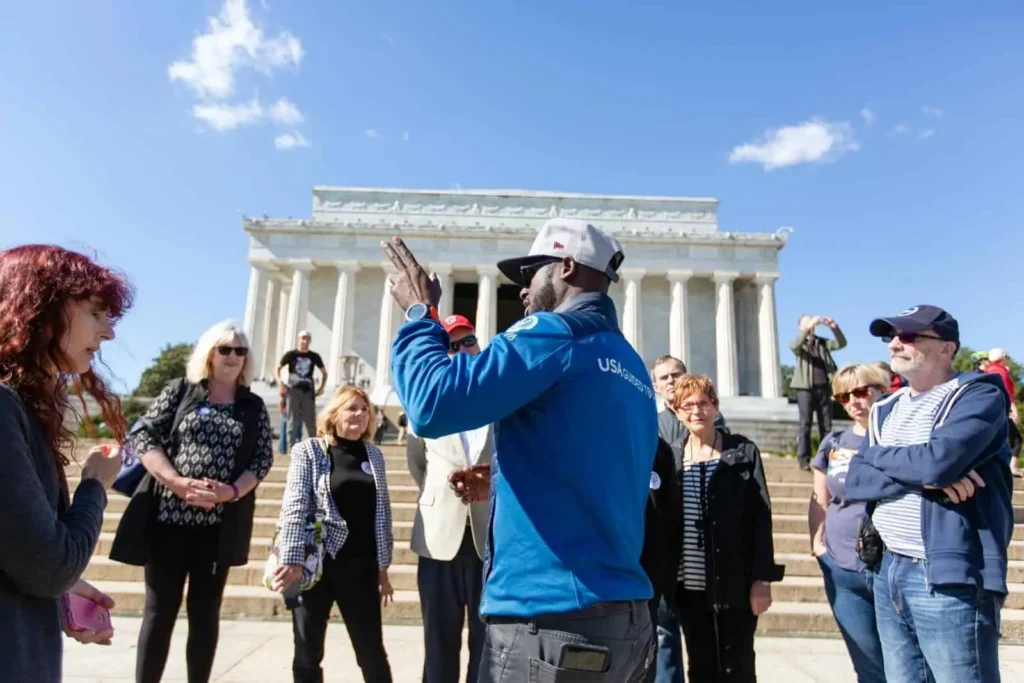
A traveler seeks a private tour of the Capitol and the National Archives.
-
Constraint: Random security sweeps and federal closures.
-
Failure Mode: Relying on a standard “tour company.”
-
Decision Point: Engaging a firm with former congressional staffers as guides.
-
Outcome: The ability to navigate tunnels and “Member-only” areas that are invisible to the public.
Resource Dynamics: The Economics of Curated Mobility
In the VIP sector, costs are rarely transparent because they are built upon layers of “indirect resource consumption.” This includes the cost of maintaining specialized permits, the insurance required for high-risk transit, and the “standby cost” of guides who are often paid a premium to remain available regardless of the schedule.
| Resource | Direct Cost (Range) | Indirect/Hidden Cost | Impact on Experience |
| Private Aviation | $3,000 – $15,000/hr | Positioning fees/Crew rest | Total time control |
| Specialized Guide | $800 – $3,000/day | Research/Prep hours | Intellectual depth |
| Permitted Access | $500 – $5,000/entry | Annual CUA fees | Exclusivity/Quiet |
| Luxury Ground | $150 – $400/hr | Deadhead miles | Physical comfort |
Strategic Tooling and Information Integrity
The execution of a high-tier tour relies on a suite of specialized tools that manage the “information flow” between the planner and the ground team.
-
Real-Time Logistics Tracking: Using encrypted communication channels to coordinate between pilots, drivers, and guides to ensure “zero-gap” transitions.
-
Site-Specific Intelligence: Accessing non-public data on crowd density at major monuments to trigger “pivot maneuvers” in the itinerary.
-
Personalized Dossiers: Creating deep-dive briefing materials for the traveler that go beyond standard Wikipedia entries, focusing on the specific geological or historical nuances of the upcoming site.
The Risk Landscape: Failure Modes in Bespoke Operations
The primary risk in VIP travel is the “Single Point of Failure.” Because these tours are highly customized, they lack the redundancy of mass-market options.
-
The Permitting Bottleneck: A change in federal policy or a local strike can invalidate a year-old permit overnight.
-
The Personnel Risk: If a specialized guide becomes unavailable, there is often no “back-up” with the same level of expertise.
-
The Weather-Logistics Trap: In regions like Alaska or the American Southwest, atmospheric conditions can ground private aviation, necessitating a “land-bridge” backup that most planners fail to prepare.
Governance, Maintenance, and Long-Term Adaptation
A successful VIP tour program is not a static product; it is a “living system” that requires constant monitoring and adjustment.
-
Review Cycles: High-tier operators must conduct post-action reviews (PARs) after every excursion to identify “friction points”—even those that the traveler may not have noticed.
-
Adjustment Triggers: If a particular museum or park becomes over-commercialized, it is removed from the “VIP” list and replaced with a more secluded alternative.
-
Layered Checklist:
-
Verification of all current CUA and state-level permits.
-
Background check and “vibe-check” of new ground personnel.
-
Full mechanical audit of all private transit assets.
-
Metrics of Excellence: Beyond Subjective Satisfaction
How does one quantitatively measure the best vip tours in the US?
-
Leading Indicator: The “Friction-Free Seconds” count—the number of minutes spent in transit or queues vs. active immersion.
-
Lagging Indicator: The “Intellectual Retention Rate”—a qualitative assessment of how much specialized information the traveler retained post-tour.
-
Documentation Example: A “Variance Report” that tracks the difference between the planned itinerary and the actual execution, highlighting where the system was able to successfully pivot.
Deconstructing Common Industry Misconceptions
-
Myth: “Private” always means “Exclusive.” (Correction: A private van following a tour bus is not exclusive; it is simply a smaller cage.)
-
Myth: VIP tours are only for the wealthy. (Correction: Specialized academic tours are often VIP in nature but are accessible to anyone with the specific intent of deep learning.)
-
Myth: You can’t get VIP access to National Parks. (Correction: You can, but it requires navigating the complex CUA system rather than just paying a higher fee.)
Conclusion
The pursuit of the best vip tours in the US is, ultimately, a search for clarity in a cluttered world. It is a commitment to the idea that time is the ultimate luxury and that knowledge is the ultimate souvenir. By understanding the structural, economic, and intellectual frameworks that govern high-tier travel, one can move beyond the surface-level offerings of the industry and secure an experience that is truly worthy of the title. This requires patience, a willingness to engage with complexity, and a recognition that the most exclusive doors are often those that require a key made of expertise rather than gold.