In the contemporary landscape of global mobility, the transition from passive consumption to active orchestration marks the definitive threshold of the sophisticated traveller. While mass-market tourism relies on the efficiency of the “average”—predetermined routes, standardised pacing, and generalised narratives—the elite expedition operates on a fundamentally different structural logic. It is a shift from a product-based economy to a service-based one, where the primary objective is the radical optimisation of the traveller’s most non-renewable resource: attention. To engage in this level of planning is to move beyond mere sightseeing and into the realm of systemic environmental management.
The complexity of modern private travel is exacerbated by what psychologists term the “Choice Paradox.” As digital access has democratized information, the friction of sorting signal from noise has increased. A truly elite itinerary is not merely an expensive version of a public one; it is a meticulously engineered sequence of events designed to eliminate “Nomadic Friction”—the logistical drag that occurs when transit, access, and experience are not perfectly synchronised. This requires a profound understanding of yield management, localised political capital, and the physiological impact of environmental shifts. The planner must act as a “Spatial Editor,” removing the unnecessary to amplify the essential.
As we move through 2026, the variables of global travel have become increasingly volatile. Geopolitical shifts, climate-driven regulatory changes, and the rise of “Access Scarcity” in formerly open heritage sites have made the role of the travel architect indispensable. This article provides a comprehensive deconstruction of the principles governing the creation of sovereign itineraries. By examining the structural frameworks and risk-mitigation strategies used by elite liaisons, we offer a definitive roadmap for those who view travel not as an escape but as a high-stakes investment in perspective and intellectual growth.
Compare luxury vip tour options.
To effectively compare luxury vip tour options, one must first dismantle the misconception that “VIP” is a monolithic designation of quality. In the professional editorial context, these options represent a spectrum of “Spatial Sovereignty.” At one end, you have the “Polished Commercial” tier—think of private viewings at major museums that are sold as SKU products. At the other end, you have “Institutional Equity” access, where the experience is generated through personal relationships with curators, scientists, or tribal elders. The most common error in a surface-level comparison is focusing on the “Hardware” (the private jet, the five-star suite) while ignoring the “Software” (the depth of the narrative and the invisibility of the logistics).
A rigorous comparison requires analysing the “Friction Coefficient” of each option. Some providers offer luxury that is reactive—they fix problems as they arise. The superior tier is “Predictive,” where the environment is manipulated hours or days before the traveller arrives. When you compare luxury vip tour options, you are essentially comparing the density of the support staff to the principal. Is there a dedicated “fixer” on the ground to clear customs before the wheels touch down? Is there a subject matter expert who can pivot the lecture from archaeology to geopolitics based on the traveller’s mood? These are the hidden variables that dictate the true yield of the journey.
Oversimplification in this sector often leads to the “Amenity Trap.” Mantravellers believe that paying more for a specific brand of hotel or vehicle guarantees a superior experience. However, the most expensive options are often the most “Rigid.” A truly elite option is “Liquid”—it can adapt to a sudden change in weather, a shift in travellers’ energy levels, or a spontaneous opportunity for access without breaking the structural integrity of the day. To compare luxury vip tour options is to look past the velvet ropes and analyse the underlying architecture of the service delivery model.
Deep Contextual Background: The Evolution of Sovereign Travel
The lineage of high-end travel can be traced from the Grand Tour of the 18th century to the “Jet Set” era of the 1960s. Historically, exclusivity was a function of physical barriers: the cost of a steamship ticket or the social connections required to enter a royal court. However, the late 20th century saw the “Democratisation of Luxury,” where business-class cabins and five-star hotels became commoditised.
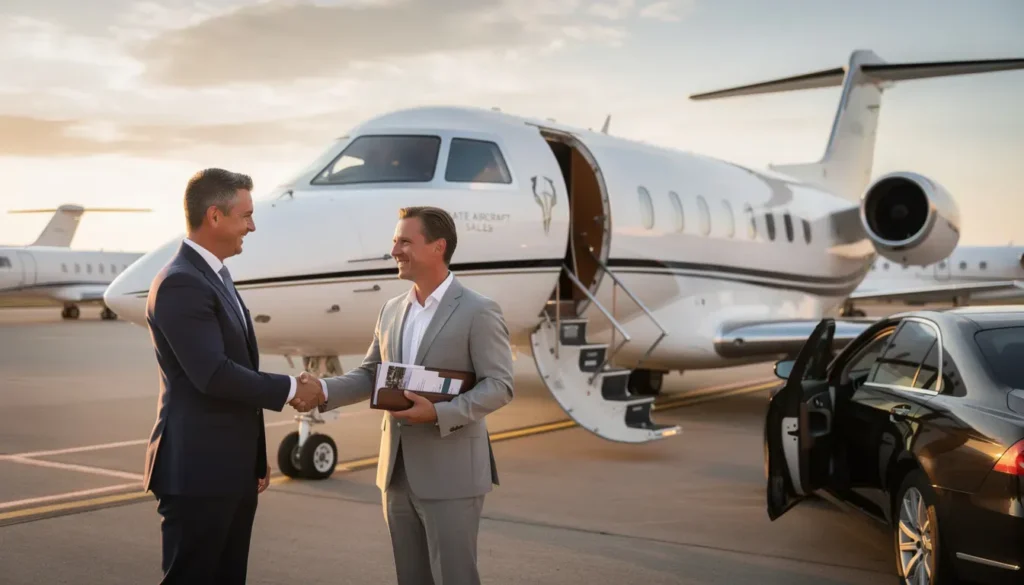
By the early 2020s, the focus shifted from “Ownership” to “Access.” In 2026, we are in the era of “Contextual Sovereignty.” The modern elite traveller is no longer impressed by gold leaf; they are impressed by silence, by the absence of other people, and by the ability to move through high-density urban environments as if they were invisible. This evolution has forced providers to move away from standardised luxury “packages” toward “Dynamic Orchestration,” where the itinerary is a living document managed by a central tactical command.
Conceptual Frameworks and Mental Models
To evaluate the structural integrity of a high-tier expedition, planners utilise several specific mental models:
-
The Attention Economy Model: Every minute spent navigating a crowd or managing a logistical delay is “Leakage” from the traveller’s attention budget. The tour’s efficiency is measured by the ratio of “Direct Experience” to “Logistical Friction.“
-
The Hub-and-Spoke Resilience Model: Establishing a high-resource base (the Hub) and conducting “Spoke” excursions. This minimises the “Packing and Unpacking Friction” and provides a stable environment for recovery.
-
The Circadian Alignment Protocol: A biological model that treats jet lag not as a nuisance, but as a systemic failure. Luxury is the ability to maintain physiological peak performance across time zones through light exposure and meal-timing management.
-
The Relational Capital Framework: Viewing the planner’s network as a liquid asset. How quickly can a “No” from a gatekeeper be converted into a “Yes”? This liquidity is the primary differentiator between a travel agent and a high-tier architect.
Key Categories and Operational Trade-offs
Identifying the correct “Operational Mode” is essential for aligning the trip’s structure with its objective. When we compare luxury vip tour options, we find they generally fall into these structural categories:
| Category | Primary Asset | Core Trade-off | Success Factor |
| Institutional Overlay | Museum/Gallery Back-channels | Rigid time constraints | After-hours immersion |
| Expeditionary/Remote | Risk Mitigation | High Discomfort | Tactical Redundancy |
| Urban Immersion | Relational Capital | Sensory Overload | “Inside” Access |
| Regenerative/Wellness | Environmental Control | Low Narrative Density | Circadian Alignment |
| Sovereign/Diplomatic | Total Discretion | High Bureaucracy | Protocol Mastery |
Decision Logic: The trade-off is often between Access and Comfort. To reach a remote archaeological site in the Gobi Desert, one must sacrifice the climate control of an urban hub. To secure “After-Hours” access to the Louvre, one must sacrifice the flexibility of a mid-day schedule. The planner’s role is to ensure these trade-offs are deliberate, not accidental.
Detailed Real-World Scenarios
Scenario 1: The “Closed-Door” Vatican Negotiation
A principal wants to view the Sistine Chapel without the daily crowd of 20,000 visitors.
-
The Plan: Securing the “Clavigero” (Key Master) tour at 5:00 AM.
-
Constraint: Requires a 4:30 AM start and a pre-negotiated premium.
-
Failure Mode: Failing to account for the “Early Morning Fatigue”, which can diminish the intellectual engagement with the art.
-
Resolution: Scheduling a mandatory “Recovery Nap” and a late-afternoon private salon discussion to synthesise the experience.
Scenario 2: The Amazonian Extraction Pivot
A private expedition in the Peruvian Amazon is interrupted by an unpredictable seasonal flood closing the primary river route.
-
The Plan: Activating a “Secondary Logistics Network” (private floatplane) that was placed on standby during the planning phase.
-
Decision Point: When does “Adventure” become “Liability”?
-
Result: The traveller views the flood as a “Scenic Flyover” opportunity rather than a logistical failure because the transition was handled invisibly.
Planning, Cost, and Resource Dynamics
The economics of high-tier logistics are rarely fixed. They are “Demand-Elastic” and highly dependent on the “Access Premium.“
Table: Comparative Resource Investment for Elite Travel
| Tier | Daily Rate (Avg) | Support Staff Ratio | Planning Lead Time |
| Bespoke Specialist | $1,500 – $4,000 | 2:1 | 3 – 6 Months |
| Ultra-Private | $5,000 – $15,000 | 4:1 | 6 – 12 Months |
| Sovereign | $25,000+ | 10:1 | 12+ Months |
Opportunity Cost: For a high-net-worth individual whose time is valued at $10,000 per hour, a 2-hour delay at a border is a $20,000 loss. In this framework, paying a $10,000 “Access Fee” to bypass the delay is a rational financial optimisation. To compare luxury vip tour options is to calculate the value of time saved against the premium paid.
Tools, Strategies, and Support Systems
-
Gated GIS Platforms: Specialised mapping tools that include private property lines and service entrances unknown to public apps.
-
Encrypted Telemetry: Using secure comms (e.g., Signal) to coordinate with drivers and security 15 minutes ahead of the traveller’s actual location.
-
Real-Time Local Intelligence: Human intelligence on the ground to monitor “Micro-Congestion” (e.g., a local protest or filming crew) that could block a private corridor.
-
Circadian Management Protocols: Using light-exposure and meal-timing strategies to sync the traveller to the local time zone within 24 hours.
-
Baggage Forwarding & Logistics: Ensuring bags are never handled or seen by the traveller during transitions, eliminating the “Luggage Anchor.“
-
Cultural Intelligence Dossiers: Pre-trip “Deep-Briefs” that provide the political and social subtext of the destination, moving beyond “Do’s and Don’ts.“
The Risk Landscape and Failure Modes
The “Taxonomy of Failure” in luxury travel is often subtle. When you compare luxury vip tour options, you must assess their failure resilience.
-
The “Scripted Guide” Risk: Hiring a private guide who still uses a mass-market script. This results in a “Private Crowd” experience—you are alone, but the narrative is common.
-
The Logistical Cascade: A 15-minute delay at an airport caused a missed “Private Entry” window at a museum. This happens when buffers are too thin.
-
The Ego Trap: Planning based on what looks good on social media rather than what aligns with the traveller’s actual intellectual interests.
-
The Digital Signature: Failure to manage the “Telemetry” of the support team, allowing third parties to infer the principal’s location by tracking the drivers’ phones.
Governance, Maintenance, and Long-Term Adaptation
A high-tier itinerary is a living document that requires “Itinerary Governance.“
-
Friction Audits: Conducted 30 days before departure to check for new construction, local strikes, or changes in institutional leadership.
-
Adjustment Triggers: Pre-set conditions (e.g., “If the temperature exceeds 95°F, we move the outdoor walking tour to the early morning”).
-
The Layered Checklist:
-
Circadian Sync Plan verified?
-
Secondary Extraction Route confirmed?
-
Institutional Gatekeepers re-contacted 48h prior?
-
Local “Fixer” on 24-hour standby?
-
Measurement, Tracking, and Evaluation
How does one measure the success of an elite journey? To compare luxury vip tour options, use these metrics:
-
Leading Indicators: The guide’s response time during the planning phase; the specificity of the pre-arrival briefing.
-
Lagging Indicators: Total “Decision-Free Hours” achieved; “Recovery Time” post-trip (a successful trip should leave the traveller energised).
-
Qualitative Signals: The number of “Unscripted Insights” shared by the guide; the lack of visible interaction with other tourists.
-
Documentation: Maintaining a “Preference Ledger” that tracks everything from pillow firmness to specific dietary “No-Gos” for future journeys.
Common Misconceptions and Systemic Myths
-
“Money opens any door”: Myth. Some doors only open to specific political or social lineages. Money is the lubricant, but “History” is the key.
-
“Luxury means ‘More'”: Myth. Contemporary luxury is about “Less”—less noise, less friction, and less unnecessary choice.
-
“The hotel concierge is the ultimate resource”: Myth. Concierges are transactional. An architect is strategic.
-
“VIP means ‘front of the line'”: Myth. True VIP means there is no line.
-
“Business class is enough”: Myth. For the elitetraveller, business class is merely a bus with a better seat. Private aviation is the baseline for sovereignty.
Ethical and Practical Considerations
High-tier expeditions carry a “Social Footprint.” A sophisticated plan considers the “Dignity of the Host.” This means ensuring that “Access” does not translate to “Intrusion.” Ethically, tthe travellershould aim to be “Low-Impact/High-Engagement.” Practically, this involves paying fair wages to the “Invisible Staff” (drivers, cleaners, security) and supporting local conservation efforts through direct, transparent contributions rather than through intermediaries. One should compare luxury vip tour options based on their commitment to regenerative travel.
Conclusion: Synthesis and Strategic Adaptability
The successful attempt to compare luxury vip tour options results in realisation that the best journeys are those where the mechanics are invisible. It is the invisible hand of the architect that allows the traveller to remain in a state of “Flow,” moving through complex environments with grace and intellectual focus.
In an era of increasing global entropy, the ability to secure one’s spatial and temporal sovereignty is the ultimate luxury. It requires a commitment to detail, a respect for localised expertise, and a willingness to view the itinerary as a living organism. By mastering these principles, the traveller ensures that their time—the only asset they cannot recover—is spent in the pursuit of genuine discovery. The goal is not merely to see the world, but to experience it in its most unadulterated form.