Waiting is often perceived as a passive state, a mere intermission between actions. However, from a systemic perspective, the “line” is a manifestation of an imbalance between demand and capacity. In modern society, queuing has evolved from a simple physical formation into a complex digital and psychological landscape. Understanding the mechanics of these delays is the first step toward reclaiming time, an asset that remains stubbornly non-renewable.
The architecture of a queue—whether at a global transit hub, a governmental agency, or a high-traffic retail environment—is rarely accidental. It is governed by mathematical principles, specifically Queuing Theory, which seeks to predict length and wait times based on arrival rates and service speeds. For the individual, the challenge is not merely to wait more patiently, but to develop the analytical tools required to bypass these systemic bottlenecks entirely.
This investigation moves beyond common-sense advice. It examines the historical stressors that create congestion, the cognitive biases that influence our perception of time, and the sophisticated frameworks used by logistics experts to streamline flow. By treating time as a capital resource, we can analyze the structures of delay and implement strategies that optimize for efficiency without sacrificing safety or quality of service.
How to avoid long waiting lines
To effectively address how to avoid long waiting lines, one must first dismantle the oversimplification that lines are simply the result of “too many people.” While volume is a factor, the true culprit is often “variance.” Variance in arrival times, variance in service complexity, and variance in human behavior create the clusters that lead to stagnation. Avoiding these lines requires a shift from a reactive mindset—arriving and hoping for the best—to a predictive one that accounts for systemic peaks and troughs.
Common misunderstandings regarding line avoidance often focus on “tricks” or “shortcuts.” These are frequently brittle and fail when most needed. For example, the belief that “Tuesday morning” is always the quietest time at a government office may be true on average, but it ignores the second-order effect of people who take Monday off and then flood the office on Tuesday to catch up. A sophisticated approach involves monitoring the interplay between official capacity and unofficial “surge” periods driven by social patterns and environmental factors.
Furthermore, the risk of oversimplification lies in ignoring the “hidden” queue. In the digital age, a line is not always visible. It might exist in the form of a processing backlog or a virtual waiting room. Avoiding these requires a different set of technical maneuvers and an understanding of the underlying software architecture. Mastering how to avoid long waiting lines means recognizing that the shortest path is rarely a straight line; it is a path calculated through the analysis of throughput, bottleneck identification, and the intelligent use of alternative entry points.
The Evolution of Congestion: From Physical to Digital
Historically, waiting was localized and physical. The industrial revolution centralized labor and services, creating the first mass-market queues. In these early systems, the only way to manage flow was through physical barriers and basic “first-come, first-served” (FCFS) protocols. These systems were transparent but inherently inefficient, as they did not account for the varying urgency or complexity of the tasks at hand.
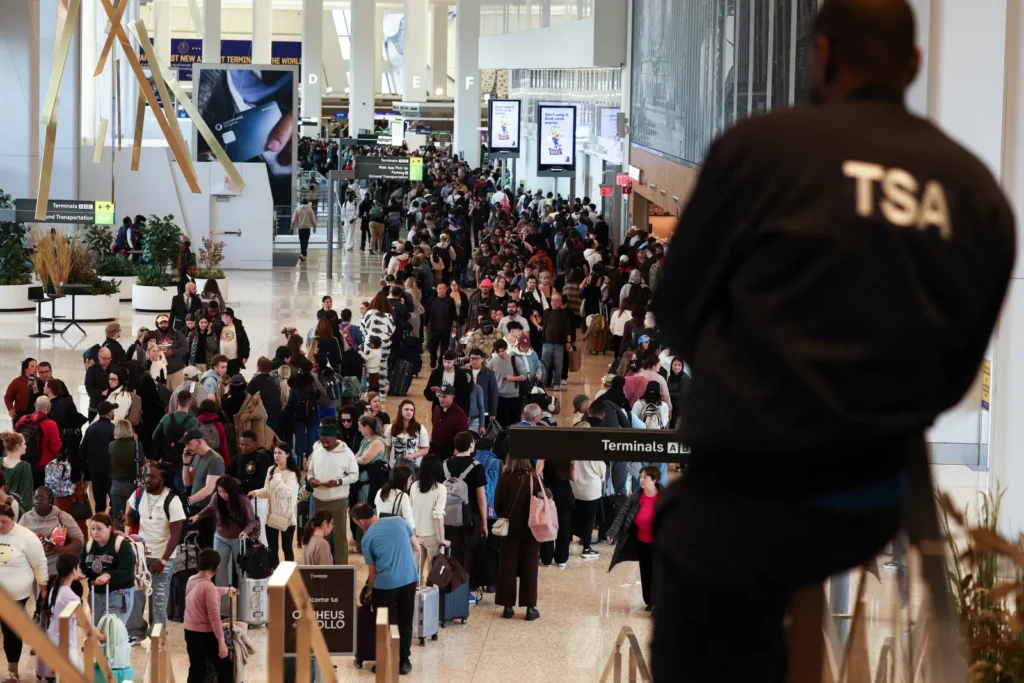
The mid-20th century saw the introduction of more sophisticated triage systems, particularly in medical and military contexts. This period marked the birth of “Priority Queuing,” where service was no longer tied strictly to arrival time but to the necessity of the outcome. This evolution introduced the “multichannel” queue, where different types of service were handled by specialized stations.
In the 21st century, the digital layer has added a new dimension. We now deal with “distributed queues,” where the individual is no longer physically present but is tracked via an algorithm. While this has removed the physical burden of standing in line, it has introduced “black box” waiting, where the traveler or consumer has no visual feedback on their progress. Understanding this history is crucial because many of our modern frustrations stem from the friction between old physical expectations and new digital realities.
Conceptual Frameworks and Mental Models
To navigate high-density environments, several mental models can be applied to identify the path of least resistance:
-
Little’s Law: This mathematical theorem states that the long-term average number of items in a stable system ($L$) is equal to the long-term average effective arrival rate ($\lambda$) multiplied by the average time a single item spends in the system ($W$). Expressed as $L = \lambda W$. For the individual, this means if you see a long line ($L$), and you know the service is slow ($W$), the arrival rate ($\lambda$) is likely surging, and you should abort the attempt.
-
The Theory of Constraints (ToC): In any system, there is one specific bottleneck that limits throughput. When trying to bypass a line, identifying whether the bottleneck is “Processing” (not enough staff) or “Access” (not enough entry points) determines your strategy.
-
The Peak-End Rule: Humans judge an experience largely on how they felt at its peak and at its end. In logistics, this means a long wait at the start of an experience is often perceived as more frustrating than a wait in the middle. Strategic planners use this to front-load service.
-
Buffer Management: This involves creating “time buffers” rather than “inventory buffers.” Instead of arriving earlier (inventory), one should have a flexible window of time (buffer) that allows for shifting the arrival to a period of lower demand.
Operational Categories and Service Trade-offs
Avoiding congestion requires understanding which “category” of service you are interacting with. Each has its own rules of engagement and inherent trade-offs.
| Category | Primary Driver of Delay | Trade-off for Speed | Reliability |
| High-Volume Transit | Security/Customs | Cost (TSA PreCheck/Global Entry) | High |
| Public Services | Staffing/Bureaucracy | Planning (Appointment windows) | Moderate |
| Medical/Urgent Care | Triage/Complexity | Access (Concierge medicine) | Low |
| High-End Retail | Experience/Personalization | Appointment (Pre-selection) | High |
| Theme Parks/Events | Entertainment Capacity | Cost (Fast Pass/VIP) | Very High |
| Digital Services | Server Load/Backlog | Timing (Off-peak requests) | Moderate |
Decision Logic for Entry Points:
When faced with a physical facility with multiple entrances (e.g., a stadium or large airport), the default human behavior is to use the entrance closest to the primary transport drop-off. Research consistently shows that the “furthest” entrance—the one requiring the most walking—often has 30% to 50% less volume. The trade-off is more physical effort for significantly less waiting time.
Analytical Scenarios: Decision Nodes and Failure Points
Scenario 1: The International Airport Security Hub
A traveler arrives at a hub airport during a holiday weekend. The main security line is estimated at 75 minutes.
-
Constraints: Fixed departure time, luggage weight, and gate distance.
-
Decision Point: Does the traveler wait, or do they seek an alternative terminal? In many airports, terminals are connected airside; security at a “domestic” terminal may be empty compared to the “international” side.
-
Failure Mode: If the connection between terminals is closed for maintenance, the traveler has wasted 20 minutes of transit.
-
Second-Order Effect: By clearing security at a quieter terminal, the traveler arrives at the gate with lower cortisol levels, enabling better decision-making for the rest of the journey.
Scenario 2: The Government Document Renewal
A professional needs to renew a license at a high-volume metropolitan office.
-
Constraints: Limited office hours, mandatory physical presence, and archaic software.
-
Decision Logic: Utilizing a “satellite” office in a nearby suburb. While the driving distance is longer, the lack of foot traffic often results in a “net-zero” time expenditure with a much higher quality of environment.
-
Second-Order Effect: Suburban offices often have more experienced staff who deal with fewer high-stress conflicts, leading to fewer processing errors.
The Economics of Time: Opportunity Costs and Resource Allocation
Every minute spent in a line is a minute of lost productivity or leisure. Calculating the “value of a wait” is essential for determining when to pay for priority.
Table: Opportunity Cost Analysis (Based on Professional Billable Rates)
| Wait Time | $25/hr Rate (Cost) | $150/hr Rate (Cost) | $500/hr Rate (Cost) |
| 30 Minutes | $12.50 | $75.00 | $250.00 |
| 1 Hour | $25.00 | $150.00 | $500.00 |
| 3 Hours | $75.00 | $450.00 | $1,500.00 |
If a “Fast Pass” or “Express Entry” costs $50, it is economically irrational for anyone with an opportunity cost higher than $50/hour to wait more than 60 minutes. However, many people suffer from “sunk cost bias,” staying in a slow line because they have already invested 20 minutes, rather than switching to a faster alternative.
Support Systems and Strategic Interventions
-
Trusted Traveler Programs: Systems like Global Entry or CLEAR are not just “skipping lines”; they are a pre-clearance of risk. The system trades personal data for temporal efficiency.
-
Digital Queue Management Apps: Services that provide real-time crowd-sourced data on wait times (e.g., Waze for traffic, or specialized apps for theme parks). Limitation: The “Observer Effect”—as soon as an app says a line is short, everyone goes there, making it long.
-
Virtual Concierges: Outsourcing the “wait” to a service or a digital bot that monitors for appointment cancellations.
-
Strategic Off-Peak Scheduling: Utilizing the “shoulder” of a peak period—the 30 minutes just before closing or immediately after opening—to exploit the lag in general public arrival.
-
Multi-Modal Access: Checking if a service offers “drop-off” or “curbside” options that bypass the main lobby entirely.
Taxonomy of Risk in High-Traffic Environments
Avoiding lines is also a safety and health strategy. High-density queues are breeding grounds for:
-
Transmission Risk: Biological exposure in confined spaces.
-
Security Risk: Large, stationary crowds are “soft targets” in high-threat environments.
-
Psychological Friction: The “Aggression Ladder,” where prolonged waiting leads to diminished patience and increased conflict with staff or other patrons.
-
Physical Fatigue: Lowered decision-making capacity due to standing, dehydration, and noise.
Governance and Long-Term Adaptation
For the individual who must regularly navigate these systems, maintenance of a “logistical profile” is required. This involves:
-
Review Cycles: Periodically checking if membership programs (Clear, PreCheck, Passport) are expiring.
-
Adjustment Triggers: If a habitual route or service consistently exceeds a 20% variance in wait time, it is time to find a new “default.”
-
Layered Checklist:
-
Check digital status (app/website) 4 hours prior.
-
Assess environmental factors (weather/holidays).
-
Verify alternative entry/exit points.
-
Ensure “waiting-time productivity” tools are ready (e.g., offline work) in case the avoidance strategy fails.
-
Metrics of Success: Quantitative and Qualitative Signals
Success in bypassing congestion is measured through:
-
Dwell Time: The actual time spent immobile.
-
Throughput Speed: The velocity of movement from entry to exit.
-
Stress Markers: Qualitative assessment of mental fatigue.
Documentation Example: The “Temporal Audit”
Keep a log for one month of all instances where you waited more than 15 minutes. Note the time of day, the location, and the perceived cause. Pattern recognition often reveals that 80% of your waiting occurs in 20% of your recurring activities.
Common Misconceptions and Systemic Myths
-
“The middle line is the fastest”: In a multi-line “banker’s queue,” mathematical probability suggests the middle lines move slower because they are subject to more visual distractions for the operators.
-
“Appointments are a guarantee”: An appointment is merely a priority slot. If the system has a backlog (variance), your 10:00 AM slot might still result in an 11:00 AM service.
-
“I’ll just go early”: “Early” is a relative term. If everyone thinks “early” is 8:00 AM, then 8:00 AM becomes the peak. True efficiency is often found at 10:45 AM or 2:15 PM.
-
“Technology always speeds things up”: Self-service kiosks often take longer because the “customer-as-operator” is less efficient than a trained professional.
-
“Short lines move faster”: A short line with complex cases (e.g., international visa issues) moves much slower than a long line with simple transactions (e.g., baggage drop).
Ethical Considerations of Priority Access
As we master how to avoid long waiting lines, we must acknowledge the “Queue Equity” debate. In public sectors (healthcare, government), allowing people to pay for speed can create a two-tier society where the wealthy have more “time” than the poor. From a logistical standpoint, priority queues can actually improve the speed for the standard line by removing high-frequency users from the main flow, but this requires careful system design to prevent the “priority” line from cannibalizing all the resources.
Synthesis: The Adaptable Practitioner
The quest for temporal efficiency is not about a frantic rush through life. It is about the deliberate management of one’s presence. Those who excel at avoiding lines do not do so through luck; they do so through the application of rigorous analysis and a deep understanding of human and systemic behavior.
As the physical world becomes more crowded and the digital world more complex, the ability to identify and bypass bottlenecks will become a defining trait of the successful professional. It requires patience to plan, the courage to deviate from the crowd, and the intellectual honesty to admit when a system is simply too broken to fix. In the end, the most effective way to manage a line is to be somewhere else entirely when it forms.