How to avoid tourist traps. The phenomenon of the “tourist trap” is not merely an inconvenience for the traveler; it is a sophisticated economic byproduct of hyper-globalization and the commodification of culture. As global mobility has expanded, the concentration of travelers into specific geographic nodes has created a market for high-volume, low-value interactions. These environments are engineered to extract maximum capital with minimal operational investment, often resulting in an experience that is a hollow facsimile of the local identity it purports to represent.
Navigating the global landscape without falling prey to these extractive models requires more than just a list of places to avoid. It necessitates a fundamental understanding of how the travel industry prioritizes visibility over depth. Authentic engagement with a destination is frequently obscured by the noise of algorithmic recommendations and curated social media imagery, both of which tend to favor locations optimized for rapid turnover rather than meaningful cultural exchange.
This analysis seeks to dissect the mechanisms behind high-traffic, low-authenticity zones and provide a rigorous framework for discernment. By moving beyond superficial advice, we can explore the systemic factors that make certain areas susceptible to commercial degradation. The goal is to equip the reader with the analytical tools to distinguish between a destination that is popular because of its merit and one that is popular because of its marketing—a distinction that is increasingly difficult to make in the current digital era.
Understanding How to Avoid Tourist Traps
The endeavor of learning how to avoid tourist traps is frequently oversimplified into a binary choice between the “beaten path” and the “hidden gem.” This is a reductive view that fails to account for the nuance of urban development and cultural preservation. A tourist trap is rarely a fixed location; rather, it is a state of operational intent. It occurs when the primary economic goal of a precinct shifts from serving a local community to servicing a transient population. When this shift happens, the quality of goods and services tends to regress toward the mean, as the incentive for repeat business disappears.
One must also recognize the risk of overcorrection. In an attempt to find “authenticity,” many travelers fall into the trap of fetishizing poverty or seeking out “untouched” areas that lack the infrastructure to support visitors responsibly. This creates a secondary type of trap—one that is ethically precarious and logistically volatile. Understanding the landscape requires acknowledging that a major monument can be “touristy” without being a “trap,” provided the infrastructure around it remains focused on preservation rather than exploitation.
The challenge lies in the fact that many modern traps are designed to look authentic. They use “artisanal” branding and “local” labels to mask a standardized supply chain. Therefore, the inquiry into how to avoid tourist traps must evolve into a study of signals: recognizing the difference between organic growth and manufactured charm. It is about identifying where the local population spends their time and capital, as this is the only true indicator of enduring value.
The Historical Evolution of the Tourist Ecosystem
The concept of the tourist trap is as old as pilgrimage itself, but its modern form coalesced during the mid-20th-century rise of the middle class. Initially, these zones were built around transit hubs—railway stations and ports—where travelers were most vulnerable and least informed. As mass aviation democratized travel, these zones expanded into entire districts.
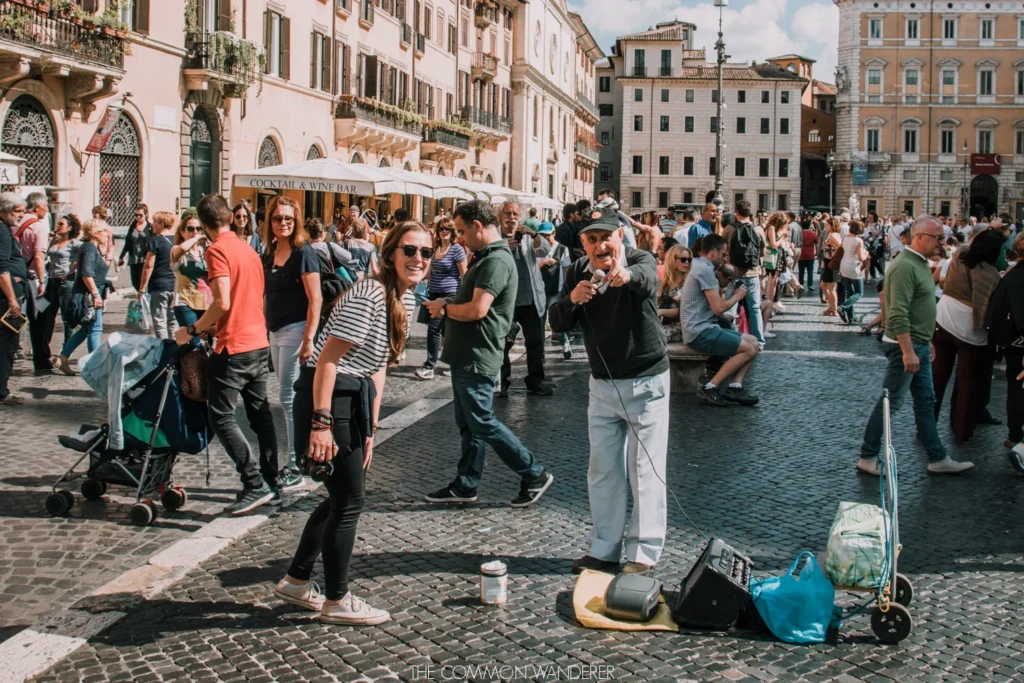
The digital revolution of the 2010s accelerated this process. Algorithms designed to maximize engagement began to prioritize visually striking locations, regardless of their cultural or culinary substance. This led to the “Instagrammization” of travel, where destinations are engineered to be photographed rather than experienced. In this environment, the trap is no longer just a high-priced café; it is an entire itinerary built on the pursuit of digital validation.
Conceptual Frameworks for Geographic Discernment
To effectively filter information and avoid extractive environments, travelers can apply several mental models:
-
The Repeat Business Index: This framework evaluates the viability of an establishment based on its customer base. If 90% of the clientele are first-time visitors who will never return, there is zero incentive for the business to maintain quality. Conversely, establishments that rely on local regulars are forced to maintain standards to survive.
-
The Aesthetic Friction Model: High-value experiences often require a degree of effort—linguistic, physical, or logistical. “Traps” are designed to minimize friction. If an experience is perfectly curated, conveniently located, and requires no cultural adaptation, it is likely optimized for extraction rather than immersion.
-
The Information Lag Principle: By the time a “hidden gem” is featured in a major publication or a viral video, the influx of capital has already begun to alter its DNA. This model suggests looking for destinations that are in their “primary state”—serving the needs of their residents—rather than their “tertiary state”—serving as a backdrop for tourism.
Categories of Inauthentic Travel Hubs
Not all traps are created equal. They can be categorized by their primary extraction method:
| Category | Primary Extraction Method | Identifiable Signal | Trade-off |
| Culinary Proxies | Low-quality ingredients at premium prices | Multi-language menus with photos | Convenience vs. Palatability |
| Monetized History | Simplified narratives and entrance fees | High concentration of souvenir shops | Access vs. Accuracy |
| Social Media Nodes | Pay-for-photo installations | Long queues for a single viewpoint | “Clout” vs. Context |
| The Artificial District | Reconstructed “Old Towns” | Lack of essential services (grocery/hardware) | Aesthetics vs. Vitality |
Decision Logic
Choosing whether to engage with a high-traffic area depends on the goal. If the objective is to see a specific historical artifact, the “trap” of the surrounding area may be a necessary cost. However, if the objective is “vibe” or “culture,” the trade-off of an artificial district is rarely worth the expenditure of time and capital.
Scenario-Based Analysis: Decision Points and Failure Modes
Scenario A: The Major Transit Hub
A traveler arrives at a central station in a European capital and is hungry.
-
The Trap Path: Eating at the restaurant directly facing the station exit.
-
The Failure Mode: High price, mediocre food, and a loud, stressful environment.
-
The Strategic Adjustment: Walking three blocks into a residential area, where the rent is lower, and the owners must satisfy the neighborhood’s tastes.
Scenario B: The “Must-See” Landmark
An iconic landmark has a 4-hour wait and is surrounded by aggressive street vendors.
-
Decision Point: Is the value in the view of the landmark or the view from the landmark?
-
Second-Order Effect: Often, the best experience of a monument is found from a rooftop café or a public park half a mile away, avoiding the crowds while still appreciating the architecture.
The Economics of Authenticity: Planning and Resource Dynamics
The pursuit of authentic experiences often carries a higher upfront “research cost” but a lower “operational cost” on the ground.
| Resource Type | High-Traffic Area (Trap) | Authentic Perimeter |
| Time Investment | Low (Easy to find) | High (Requires research/transit) |
| Financial Cost | High (Inflated “tourist tax”) | Low to Moderate (Local pricing) |
| Mental Energy | High (Managing crowds/scams) | Moderate (Navigating local norms) |
Strategic Support Systems and Information Integrity
The most effective tool for avoiding extractive tourism is the diversification of information sources.
-
Local Journalism: Use translation tools to read local lifestyle magazines or food critics.
-
Mapping Data: Analyze the density of certain types of businesses. A high density of “Money Exchange” and “Luggage Storage” shops indicates a zone optimized for transients.
-
Specialized Forums: Engage with communities focused on specific interests (e.g., architecture, specialty coffee, history) rather than general travel.
Governance, Maintenance, and Long-Term Adaptation
Itineraries should not be static documents. They require a “review cycle” even while the journey is in progress.
-
The 15-Minute Rule: If you enter an area and realize it is a commercial trap, have a pre-planned “escape route” to a secondary, quieter neighborhood.
-
Adjustment Triggers: If you see more than three global fast-food chains on one block, it is a signal to move further from the center.
Measurement, Tracking, and Evaluation
How do you know if you’ve successfully avoided the traps?
-
Qualitative Signal: Do you feel like a guest or a customer?
-
Quantitative Signal: What is the ratio of residents to visitors in your immediate vicinity?
-
Documentation: Keep a log of where you found the highest value. Often, it is the place you found through a personal recommendation or a spontaneous detour.
Deconstructing Common Travel Misconceptions
-
Myth: Street food is always authentic.
-
Correction: Many “street food markets” are now curated commercial entities designed specifically for tourists.
-
-
Myth: If there is a line, it must be good.
-
Correction: A line is often a sign of social proof rather than quality.
-
-
Myth: “Off the beaten path” means “Safe and easy.”
-
Correction: Venturing away from infrastructure requires higher levels of self-reliance and situational awareness.
-
Conclusion
The ability to distinguish between meaningful exploration and commercialized consumption is the hallmark of the sophisticated traveler. Learning how to avoid tourist traps is not about elitism or avoiding popular landmarks; it is about reclaiming the agency to decide where one’s attention and resources are spent. In an era where every square inch of the globe is mapped and marketed, the ultimate luxury is the ability to see a place for what it is, rather than what it has been packaged to be.