The contemporary travel environment is defined by a paradox: as global connectivity increases, so does the sophistication of the risks facing the individual. Travel, at its core, is a high-bandwidth information exchange between a visitor and a destination. Fraudsters, operating within this ecosystem, function as information manipulators—they exploit the cognitive dissonance that occurs when a traveler’s desire for an “authentic” or “convenient” experience overrides their situational awareness. To navigate this landscape safely, one must move beyond the superficial advice of “avoiding dark alleys” and adopt a systemic, professionalized approach to risk management.
True security in travel is not merely about avoiding specific negative outcomes; it is about the design of an itinerary that is resilient to failure. Whether navigating digital risks, such as sophisticated phishing and “quishing” (QR code fraud), or physical threats, such as engineered tourist traps, the most successful travelers act as their own risk managers. They view their trip not as a passive consumption of services, but as an active operation that requires pre-trip intelligence, real-time monitoring, and an established protocol for when things inevitably deviate from the plan.
This analysis deconstructs the modern risk landscape into its fundamental components. By understanding the psychological mechanisms scammers utilize, the structural vulnerabilities of digital travel platforms, and the institutional frameworks that provide legitimate safety, one can move from being an easy target to becoming a resilient, informed explorer. This guide is intended for the reader who demands depth, rigor, and actionable intelligence, treating their security as an essential investment in the success of their journey.
Understanding “how to avoid travel scams.”
The primary misunderstanding when learning how to avoid travel scams is the assumption that fraudsters are exclusively targeting those who are “naïve” or “unprepared.” In reality, modern scams are designed to bypass rational thought entirely by exploiting universal cognitive biases, such as social reciprocity, the need for efficiency, and the fear of missing out. The most effective scams are not those that use brute force, but those that insert themselves into the legitimate logistical workflow of your trip—be it a “confirmed” hotel booking, a “necessary” taxi diversion, or a “verified” QR code for a menu.
A secondary risk is the “institutional blind spot.” Many travelers assume that because a platform is well-known—such as a major booking site—the transactions occurring on it are inherently safe. However, fraudsters have become masters of “platform hijacking,” where they create listings so convincing that they mimic the trust indicators of the parent platform. Therefore, avoiding travel scams is less about judging the platform and more about verifying the transaction. One must adopt a protocol of “trust, but verify” for every node of the journey, ensuring that payments are kept within secure, regulated channels and that credentials are independently verified.
Finally, the most significant oversimplification is the reliance on “gut instinct.” While intuition is a powerful tool, it is easily compromised by the environmental stress of travel. Cognitive overload—caused by navigating unfamiliar transit systems, managing currency exchange, and dealing with language barriers—reduces our capacity for critical analysis. The most effective defense is not a “feeling” of safety, but a predefined set of operational procedures that you follow automatically, regardless of how tired or distracted you feel.
Deep Contextual Background: The Evolution of Fraud
Fraud has evolved alongside the infrastructure of travel. In the era of paper tickets and travel agents, scams were primarily physical and localized. Today, the digitization of travel has allowed for the “scaling of deceit.” A scam that once required an in-person interaction can now be automated and distributed to thousands of targets simultaneously through social media, fake listings, and spoofed networks.
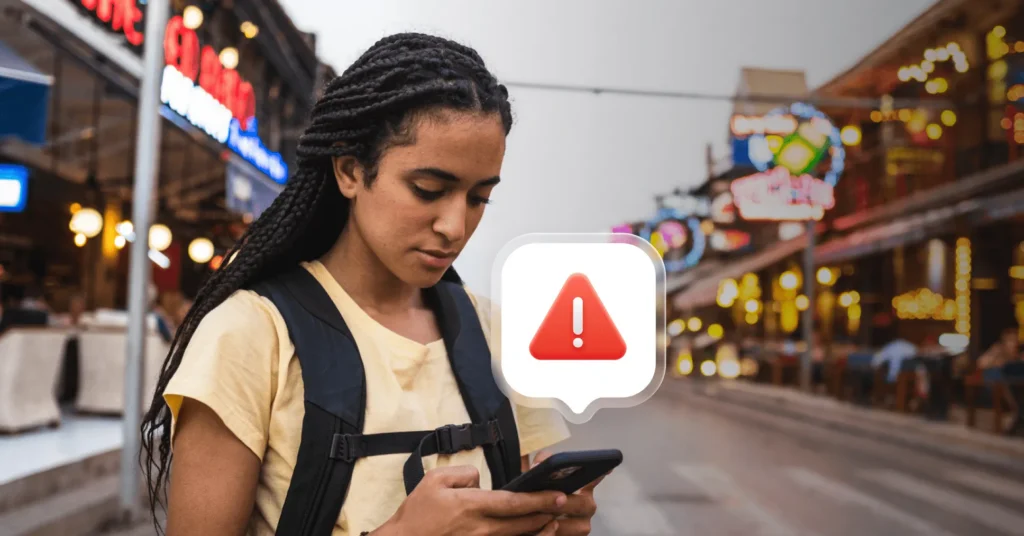
This systemic evolution is driven by the fact that travel is inherently data-rich and time-sensitive. Fraudsters utilize this by creating artificial urgency, forcing the traveler to make a decision—such as confirming a “payment issue” for a booking—before they have time to verify the request with the actual service provider. Recognizing this systemic shift is the first step in protecting oneself.
Conceptual Frameworks for Risk Evaluation
To build a resilient travel security strategy, apply these three mental models:
-
The Transactional Integrity Model: Every interaction—booking a room, hailing a taxi, scanning a menu—is a transaction. Ask: Is this transaction occurring within the official, secure environment, or is it being diverted into a secondary, unregulated channel?
-
The Cognitive Load Buffer: Acknowledge that you are less rational when you are tired, hungry, or stressed. Schedule your most critical logistical decisions (e.g., booking expensive transfers, transferring large sums) during your most clear-headed periods.
-
The Institutional Leverage Model: Rely on established institutions—such as the hotel front desk or official transit hubs—rather than unvetted “experts” or “helpful strangers.” If you are unsure of a service, revert to the primary source, even if it is less convenient.
Key Categories of Modern Travel Risks
| Risk Category | Exploitation Mechanism | Primary Mitigation |
| Digital Hijacking | Spoofed networks/Fake portals | Direct site verification (HTTPS) |
| Logistical Engineering | Taxi diversions/Fake bookings | Pre-booked, vetted transport |
| Social Engineering | Reciprocity/Guilt/Urgency | Established boundary protocols |
| Physical Distraction | Managed environments/Crowds | Asset concealment/Minimal carry |
| QR/Digital Quishing | Phishing portals | Native scanners/URL checking |
Realistic Decision Logic
The most frequent failure mode is the “Convenience Penalty.” A traveler chooses a cheaper, unvetted taxi or a “special” shortcut because it saves time or money. In the event of a scam, the cost of the loss (monetary, time, and psychological) almost always dwarfs the initial savings. The optimal strategy is to budget for “Logistical Integrity”—paying the premium for vetted, official services as an insurance policy against the systemic risks of the environment.
Real-World Scenarios: Analysis of Failure Modes
Scenario 1: The “Hotel Overbooked” Taxi Diversion
-
Scenario: A taxi driver insists your pre-booked hotel is closed or overbooked and offers to take you to a “better” alternative.
-
Failure Mode: Accepting the driver’s narrative out of panic.
-
Second-Order Effect: You are taken to a lower-quality hotel where the driver receives a commission, often at an inflated room rate, while your original booking remains charged.
Scenario 2: The “Quishing” Payment Portal
-
Scenario: You scan a QR code on a restaurant table to pay your bill. The portal looks identical to the official one but is actually a phishing site.
-
Failure Mode: Entering your full credit card information without inspecting the URL.
-
Second-Order Effect: Immediate card compromise and potential fraudulent charges across other accounts.
The Risk Landscape: A Taxonomy of Compounding Failures
-
The Isolation Trap: Fraudsters prioritize isolating the traveler from their support systems (e.g., getting them into a private vehicle or away from a public square).
-
The Urgency Accelerator: Scams that demand immediate action exploit the “fight or flight” response, bypassing the traveler’s ability to verify the request.
-
The Reciprocity Bind: By offering a small, “free” gift, scammers create a social obligation that is difficult for many to refuse, which then escalates into a demand for payment.
Metrics of Excellence: Tracking and Evaluation
-
Leading Indicator: “Pre-Trip Verification Count”—how many of your bookings, transfers, and digital tools have been independently verified against official sources.
-
Lagging Indicator: “Reaction Time to Irregularity”—the speed at which you detect and respond to a suspicious transaction (e.g., using real-time banking push notifications).
-
Documentation Example: Maintaining a “Transaction Audit Log,” where you record every significant booking and the official contact information used to verify it, ensuring a paper trail exists if a dispute arises.
Conclusion
Understanding how to avoid travel scams is not about living in a state of perpetual suspicion, but about establishing a baseline of professionalized security. It is about recognizing that your vulnerability is a function of the complexity of the travel environment and the sophistication of those who exploit it. By institutionalizing your security protocols—treating your digital hygiene, your logistical planning, and your situational boundaries with the same care you would a professional operation—you transform travel from a fragile, reactive experience into a resilient and genuinely transformative exploration. The goal is to move through the world not with fear, but with the confidence that comes from a well-engineered defense.