The North American landmass presents a unique topographical challenge that has, over centuries, transitioned from a barrier of survival to a theater of high-stakes engagement. The modern pursuit of “adventure” in this context is no longer a struggle against the unknown, but a curated interaction with extreme environments. As global mobility increases, the distinction between a standardized sightseeing excursion and a legitimate expedition has become blurred by marketing vernacular. However, for the serious practitioner, adventure travel remains a discipline of logistics, physical readiness, and environmental literacy.
The current landscape of domestic expeditions is defined by its staggering diversity—ranging from the sub-arctic maritime corridors of the Pacific Northwest to the hyper-arid slot canyons of the Colorado Plateau. This variety necessitates a sophisticated approach to planning that goes beyond surface-level enthusiasm. Authentic adventure is a product of “managed risk”—a state where the participant’s skills are intentionally tested against the variables of the natural world, supported by a framework of professional oversight and technical precision.
To analyze the current state of high-tier exploration, one must examine the systemic structures that allow for these interactions. This involves an assessment of federal land management policies, the technical evolution of outdoor equipment, and the shifting philosophy of “leave no trace” ethics. The objective is to identify the vectors that facilitate genuine immersion in an era of digital saturation, ensuring that the expedition remains an intellectual and physical endeavor rather than a mere consumer product.
Understanding “top adventure tours in America.”
The primary misunderstanding surrounding the search for top adventure tours in America lies in the conflation of “excitement” with “adventure.” In a professional editorial context, excitement is a momentary physiological response, whereas adventure is a sustained engagement with uncertainty. A high-speed boat ride may be exciting, but a ten-day self-supported traverse of the Brooks Range is an adventure. The distinction is critical because it dictates the level of preparation and the type of expertise required.
Oversimplification often leads travelers to ignore the “institutional layer” of American exploration. The United States maintains some of the most strictly regulated wilderness areas in the world. Whether it is a private permit for the Colorado River or a Commercial Use Authorization (CUA) for a guided summit of Denali, the “top” tours are those managed by operators who possess deep historical and legal integration with these land management agencies. Without this institutional access, the “adventure” is often a sanitized imitation occurring on the periphery of true wilderness.
There is also the risk of “competence gap” failure. Many participants seek out high-intensity tours without an honest assessment of their own technical baseline. The most effective adventure tours mitigate this through a “staged immersion” model, where participants are screened or trained in lower-stakes environments before entering high-consequence zones. This ensures that the adventure remains a growth experience rather than a traumatic event, allowing for a higher degree of immersion and a successful outcome.
The Evolutionary Context of American Exploration
The genealogy of the American expedition began with the utilitarian surveys of the 19th century—missions of expansion and resource identification. These were followed by the “Golden Age” of alpine exploration in the early 20th century, where the focus shifted to the aesthetic and physical conquest of peaks. In the modern era, we have entered the stage of “Regenerative Exploration,” where the value of a tour is measured not just by the summit reached but by the participant’s contribution to conservation and the scientific understanding of the terrain.
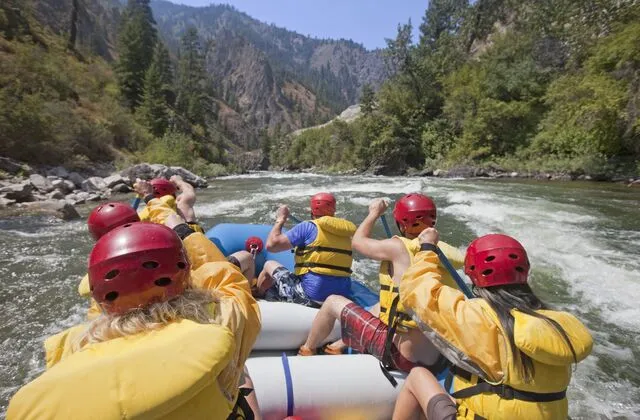
Today’s adventure sector is also a byproduct of “Military-to-Civilian” technology transfer. Innovations in satellite communication, lightweight polymers, and weather forecasting have transformed what was once a high-mortality pursuit into a manageable, albeit intense, activity. This technological safety net has allowed for the expansion of adventure into deeper, more remote corridors that were previously inaccessible to anyone but the most elite professionals.
Conceptual Frameworks for Expeditionary Planning
To evaluate the validity of an adventure tour, one should apply several mental models:
-
The Objective vs. Subjective Danger Filter: Objective dangers (rockfall, weather, tides) are independent of the participant. Subjective dangers (fatigue, poor gear choice, lack of skill) are within the participant’s control. A top-tier tour is one that eliminates as much subjective danger as possible through rigorous preparation.
-
The Intensity-Duration Equilibrium: High-intensity activities (skydiving, rapid shooting are usually short. High-duration activities (long-distance trekking, maritime sailing) are usually of moderate intensity. The most profound tours are those that find a “sweet spot” where intensity is maintained over a duration long enough to trigger a psychological shift in the participant.
-
The Autonomy Gradient: This measures how much of the “work” of the adventure is done by the participant versus the guide. Authentic adventure tours move the participant up the gradient, from being a passenger to becoming an active member of the expedition team.
Categorization of Wilderness Engagement and Trade-offs
American adventure is segmented by terrain and the technical skills required to navigate it.
| Category | Primary Environment | Primary Technical Skill | Trade-off |
| Alpine/Mountaineering | High Altitude/Glacial | Rope Work/Crampons | Physical Peak vs. Extreme Cold |
| River/Riparian | Whitewater Canyons | Oar/Paddle Navigation | Total Isolation vs. Gear Weight |
| Arid/Canyonlands | Slot Canyons/High Desert | Canyoneering/Hydration Mgmt | Visual Grandeur vs. Heat Stress |
| Maritime/Coastal | Pacific NW/Alaskan Fjords | Kayak/Sailing Navigation | Wildlife Access vs. Wet Cold |
| Sub-Arctic/Tundra | Alaskan Interior | Bushcraft/Navigation | True Wilderness vs. Logistical Cost |
Realistic Decision Logic
The choice of an expedition depends on the “Tolerance Profile” of the traveler. For those who prioritize mental fortitude over physical explosive power, long-distance maritime or tundra tours are superior. For those seeking peak physiological performance, alpine mountaineering is the priority. The common failure mode is selecting a tour based on “visual appeal” rather than “technical compatibility.”
Scenario-Based Analysis: Decision Logic in Extreme Terrain
Scenario A: The Grand Canyon River Traverse
-
Constraint: Strict 21-day permit cycles and limited extraction points.
-
Decision Point: Choosing between a motorized raft (saves time, more people) or an oar-powered dory (slower, traditional, intimate).
-
Second-Order Effect: The dory requires higher physical engagement and offers less “luxury” but provides a silent connection to the canyon walls that motor noise destroys. The “top” adventure choice here is almost always the oar-powered craft.
Scenario B: The Denali Summit Attempt
-
Constraint: Extreme weather windows and high altitude.
-
Failure Mode: Relying on a “luxury” camp setup.
-
Decision Point: Prioritizing “speed of movement” over “camp comfort.”
-
Outcome: In high-altitude alpine environments, “light is right.” The most successful tours are those that minimize weight to maximize the chances of hitting a brief weather window, even if it means sleeping in more spartan conditions.
The Economics of Adventure: Resource and Cost Dynamics
Expedition costs are a function of “logistical depth.” The further one moves from an established road head, the cost increases exponentially due to the need for specialized transport (bush planes, pack animals) and higher insurance premiums.
| Resource | Direct Cost (Range) | Opportunity Cost | Impact on Success |
| Bush Plane Charter | $1,500 – $5,000 | Weight restrictions | Access to remote hubs |
| Professional Lead Guide | $500 – $1,500/day | Decision-making autonomy | Risk mitigation/Success rate |
| High-Spec Tech Gear | $2,000 – $8,000 | Steep learning curve | Thermal/Physical safety |
| Permit/CUA Fees | $200 – $2,500 | Advanced booking (1 year+) | Legal exclusivity/Quietude |
Strategic Support Ecosystems and Technical Tooling
The execution of a successful expedition relies on a suite of “Invisible Infrastructure”:
-
Satellite Telemetry: Using devices like Garmin inReach or Iridium GO! to maintain a data link for weather updates and emergency coordination.
-
Predictive Weather Modeling: Utilizing localized meteorological data to anticipate “micro-climates” common in mountainous or coastal terrain.
-
Dynamic Itineraries: Modern tours use “Branching Logic”—if a river rise is detected upstream, the team pivots to a pre-identified high-ground hiking route.
The Risk Landscape: Identifying Compounding Failure Modes
Risk in adventure travel is rarely a single event; it is a “chain of causality.”
-
The Ego-Technical Mismatch: A participant overestimates their fitness, causing them to move more slowly than the group, leading to the group being caught in an afternoon thunderstorm (Objective Danger).
-
The Equipment Cascade: A minor failure in a stove (Technical) leads to an inability to melt snow for water, leading to dehydration (Subjective), leading to altitude sickness.
-
The Extraction Gap: In remote Alaska or the Grand Canyon, a medical emergency is complicated by “time-to-care.” If the weather prevents a helicopter landing, a “manageable” injury becomes life-threatening.
Governance, Adaptation, and Long-Term Sustainability
A top adventure tour must operate under a “Stewardship Protocol”:
-
Monitoring: Real-time assessment of impact on sensitive soils or alpine flora.
-
Adjustment Triggers: If a particular wildlife corridor is active, the tour route is automatically diverted to prevent disruption.
-
Long-Term Review: Yearly audits of the “human-to-wilderness” ratio to ensure that the presence of the tour isn’t degrading the very environment it celebrates.
Metrics of Success: Qualitative and Quantitative Evaluation
How do we evaluate the effectiveness of top adventure tours in America?
-
Leading Indicator: The “Skills-Acquisition Rate”—did the participant learn to navigate or manage their own gear by day five?
-
Lagging Indicator: The “Post-Expedition Integration”—the long-term psychological impact of the challenge on the participant’s daily life.
-
Quantitative Signal: The “Safety-to-Summit Ratio”—the number of successful objectives reached without a “near-miss” or injury event.
Deconstructing Misconceptions in Adventure Travel
-
Myth: “Extreme” means “Dangerous.” (Correction: Extreme refers to the environment; danger is a function of poor management.)
-
Myth: You need to be a professional athlete. (Correction: Mental endurance and “grit” are often more important than VO2 max in long-duration adventure.)
-
Myth: Guided tours are “Adventure Light.” (Correction: A professional guide allows you to enter more dangerous and remote terrain than you could ever handle alone, increasing the true adventure factor.)
Conclusion
The pursuit of the top adventure tours in America is an exercise in intellectual and physical honesty. It requires a rejection of the sanitized “tourist” mindset in favor of the “expeditionary” mindset. In a nation defined by its vastness and its geological diversity, the ultimate adventure is not found in a brochure, but in the calculated crossing of a threshold—where the safety of the known is traded for the rigors of the frontier. This process demands respect for the terrain, a commitment to technical mastery, and an understanding that the most profound summits are those that change the person who stands upon them.