Heritage travel in the United States is frequently reduced to the act of visiting monuments or reading plaques, but a more rigorous analysis reveals it as an engagement with the “living tissue” of national identity. Unlike standard tourism, which prioritizes contemporary leisure, heritage exploration is a forensic exercise. It involves navigating the layers of architectural, social, and political history that define a specific geography. As the American landscape undergoes rapid digital and physical shifts, the sites that preserve these narratives serve as essential anchor points for understanding the systemic forces that built the nation.
The complexity of these experiences lies in their dual nature: they are both physical locations and symbolic constructs. To visit the missions of San Antonio or the industrial corridors of the Rust Belt is to witness the tension between preservation and progress. Managing these journeys requires a sophisticated understanding of how history is curated, funded, and interpreted. It is not merely a matter of transportation but of intellectual preparation—recognizing that the “heritage” being viewed is often a dialogue between the past and the current cultural moment.
For the serious researcher or the discerning traveler, the challenge is to bypass the sanitized versions of history often found in high-traffic centers. True depth is found in the “narrative seams”—those places where different historical eras overlap or collide. This requires a transition from being a passive observer to an active investigator. By applying frameworks of critical analysis to the travel experience, one can transform a simple visit into a profound study of continuity and change in the American experiment.
Iconic heritage tours usa
The phrase iconic heritage tours usa describes a specific subset of travel dedicated to sites of profound historical significance, typically those designated by the National Register of Historic Places or UNESCO. However, a multi-perspective explanation must acknowledge that “iconic” is a moving target. What is considered a heritage priority in the 21st century—such as the sites of the Civil Rights movement or the early digital revolution in Silicon Valley—differs significantly from the colonial-centric focuses of the early 20th century.
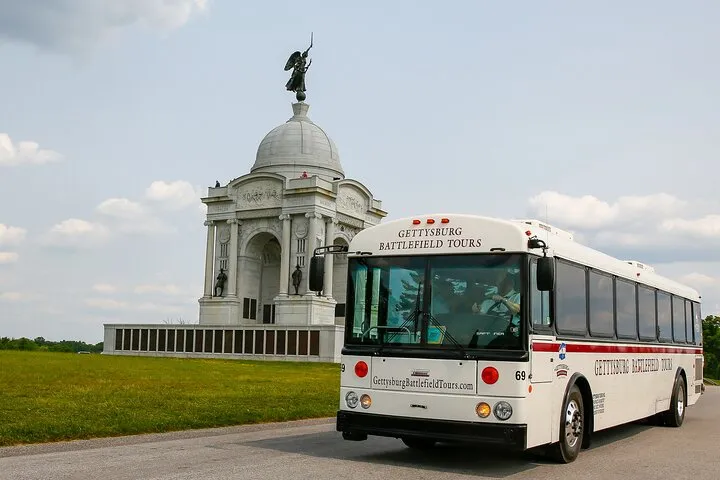
A common misunderstanding is the belief that heritage tours are inherently static. In reality, these sites are battlegrounds of interpretation. The risk of oversimplification occurs when a traveler views a site like Gettysburg or Independence Hall as a closed book. Effective heritage management involves recognizing the “historiographical variance”—how the story told at a site changes based on new archaeological findings or shifting societal values. To engage with iconic heritage tours usa is to engage with a process of ongoing discovery rather than a fixed curriculum.
Furthermore, the logistical reality of heritage travel in America is often shaped by the “Preservation-Access Paradox.” The more iconic a site becomes, the more the physical environment is threatened by the very people coming to witness it. Avoiding the “Disneyfication” of these sites—where the experience becomes a sterilized, high-volume performance—requires the traveler to seek out off-peak windows and specialized guides who prioritize primary-source evidence over anecdotal entertainment.
Deep Contextual Background: The Evolution of American Preservation
American heritage travel began as a localized, often private effort. In the mid-19th century, organizations like the Mount Vernon Ladies’ Association pioneered the concept that significant sites should be saved from private development for public benefit. This established the “Gentleman’s History” model, which focused on the residences of political and military leaders.
The 1930s saw a massive systemic shift with the New Deal and the creation of the Historic American Buildings Survey (HABS). This was the first time heritage documentation was treated as a federal infrastructure project. Following World War II, the rise of the automobile and the National Historic Preservation Act of 1966 democratized heritage travel, but also led to the “Roadside Heritage” era—a period where history was often commodified into kitsch.
Today, we are in the era of “Contextual Heritage.” The focus has shifted from isolated buildings to entire cultural landscapes. We no longer just look at a factory; we look at the entire mill town and the environmental impact of the industry. This systemic approach requires a traveler to understand the interconnectedness of geography, economics, and social history.
Conceptual Frameworks and Mental Models
To navigate the vast landscape of American history, travelers should apply several mental models to filter their experiences:
-
The Palimpsest Effect: View a city or site as a parchment that has been written on, erased, and rewritten multiple times. In a heritage context, look for the “ghosts” of previous eras (e.g., old cobblestones beneath modern asphalt).
-
The Core-Periphery Model: Iconic sites are the “core,” but the “periphery”—the surrounding residential or industrial zones—often contains the most authentic, uncurated evidence of how the core actually functioned.
-
The Scarcity vs. Ubiquity Scale: Evaluate a site by how unique its remaining physical fabric is. A reconstructed house has high narrative value but low material scarcity; a site with original 18th-century timber has high material scarcity.
-
The Triage of Memory: Recognizing that it is impossible to save everything. Travelers must assess which sites are being “triaged” (allowed to decay) and why, which provides insight into current cultural priorities.
Categories of Heritage Engagement
Heritage travel in the U.S. is not a monolith; it is divided into operational categories with distinct trade-offs.
| Category | Primary Asset | Trade-off | Logistical Complexity |
| National Landmarks | Federal Monuments | High Crowds / High Security | Low (Standardized) |
| Living History | Re-enactments / Colonial Towns | “Sanitization” Risk | Moderate (Scheduled) |
| Industrial Heritage | Mills / Mines / Ghost Towns | Physical Safety / Access Rights | High (Private Property) |
| Civil Rights/Social Justice | Trail Sites / Urban Hubs | Emotional Weight / Urban Traffic | Moderate |
| Ancestral/Indigenous | Earthworks / Pueblo Sites | Ethical Sensitivity / Remoteness | High (Geographical) |
Decision Logic:
When selecting an engagement category, one must decide between Material Authenticity (seeing the original object) and Narrative Immersion (feeling the atmosphere). Living history sites excel at immersion but often fail at material authenticity due to the necessity of modern safety upgrades.
Detailed Real-World Scenarios
Scenario 1: The Boston Freedom Trail Integration
A visitor intends to walk the 2.5-mile path.
-
The Challenge: The trail is a hybrid of 18th-century sites and 21st-century commerce.
-
The Sophisticated Approach: Treating the trail not as a single walk, but as a series of “archaeological pits.” Instead of following the red line continuously, the traveler investigates the side streets in the North End to see how the 1770s footprint constrained the 1920s tenements.
-
Failure Mode: Treating the sites as isolated “check-boxes” rather than a continuous urban evolution.
Scenario 2: The Deep South Civil Rights Trail
A researcher is tracing the 1965 Voting Rights march from Selma to Montgomery.
-
Constraints: Many sites are in economically distressed areas with limited tourist infrastructure.
-
Decision Point: Should one stay in a centralized hub (Montgomery) or attempt to lodge in the rural nodes?
-
Second-Order Effect: Choosing rural lodging provides a visceral understanding of the “isolation” that was a key factor in the tactical planning of the 1960s.
Planning, Cost, and Resource Dynamics
The “Cost of History” is rarely just the ticket price. It involves the “access cost” of reaching remote sites and the “time cost” of engaging with primary documents.
Table: Resource Allocation for Deep Heritage Exploration
| Resource | Low-Depth Visit | High-Depth Expedition | Impact on Experience |
| Time | 1–2 hours per site | 1–2 days per site | Allows for archival research |
| Expertise | Audio Guide | Hired Academic/Curator | Moves from anecdote to data |
| Access | Public Viewing Area | Behind-the-scenes/Private Archive | Material contact with history |
Tools, Strategies, and Support Systems
-
HABS/HAER Archives: Utilizing the Library of Congress digital archives before arrival to see the original blueprints of the site.
-
GIS Mapping: Using Geographic Information Systems to overlay 19th-century maps onto current GPS data to find “hidden” foundations.
-
Local Historical Societies: These are the “fixers” of the heritage world. They provide access to keys and documents that are not on the public tour.
-
Specialized Bibliographies: Carrying a curated list of non-fiction works specific to the site rather than a general guidebook.
-
Oral History Registries: Listening to recorded interviews of residents from the era in question while physically standing at the site.
The Risk Landscape and Failure Modes
Heritage travel carries risks that are often invisible until the moment of arrival.
-
The “Reconstruction Trap”: Arriving at a site only to realize it is a 1970s recreation with no original material.
-
Seasonal Decay: Many heritage sites (especially industrial ones) are subject to “deferred maintenance.” A site accessible in May might be closed for emergency structural repair in October.
-
Interpretation Bias: The risk of visiting a site that has not updated its narrative to include the perspectives of marginalized groups who were essential to the site’s history.
Governance and Long-Term Adaptation
For those who treat heritage exploration as a long-term pursuit, “governance” involves a systematic review of one’s findings.
-
Documentation Cycles: Maintaining a consistent field journal that tracks changes in site interpretation over decades.
-
Adjustment Triggers: If a site moves from “historical landmark” to “commercial event space,” it may no longer serve the researcher’s intent and should be removed from the primary list.
-
Layered Checklist for the Field:
-
Verify original material vs. reconstruction.
-
Check for current archaeological digs on-site.
-
Identify the “counter-narrative” (who is missing from the plaque?).
-
Verify structural safety in non-standard sites (mines/mills).
-
Measurement, Tracking, and Evaluation
How do you evaluate the success of iconic heritage tours usa?
-
Leading Indicators: Number of primary source documents read prior to arrival; number of private archive appointments secured.
-
Lagging Indicators: Ability to synthesize the site’s history into a broader geopolitical context; discovery of an unmapped historical feature.
-
Documentation Examples:
-
The Comparative Photo-Essay: Taking a photo from the exact 1900 vantage point to measure urban “encroachment.”
-
The Narrative Map: Drawing a flow-chart of how a single event at the site impacted national policy.
-
Common Misconceptions and Systemic Myths
-
“History is settled”: Myth. History is a constantly revised hypothesis based on new evidence.
-
“National Parks are only for nature”: Myth. The NPS manages more historical and heritage sites than any other entity in the U.S.
-
“Older means more important”: Myth. A 1950s atomic testing site may have more profound global heritage impact than a 1750s barn.
-
“Plaques tell the whole story”: Myth. Plaques are often limited by space and the political climate of the year they were cast.
-
“Ghost towns are abandoned”: Myth. Most are managed sites with complex legal and preservation status.
Ethical and Practical Considerations
The ethics of heritage travel involves the “Consumption of Tragedy.” Visiting sites of former slavery, conflict, or disaster requires a posture of “Critical Respect.” This means avoiding voyeurism and instead focusing on the site as a tool for civic education. Practically, this involves supporting local conservancies that prioritize structural integrity over “tourist-friendly” amenities.
Synthesis: The Future of the American Past
The ultimate goal of engaging with the American past is to recognize that we are currently living in someone else’s future heritage. The iconic heritage tours usa of the next century are being built today. Mastery of this domain requires a blend of curiosity and skepticism—a willingness to look beneath the red-white-and-blue paint to find the complex, often contradictory machinery of history.
By treating these sites not as relics to be worshipped, but as data points to be analyzed, the traveler gains a clearer view of the present. Heritage is not a burden; it is a map. Understanding how to read that map is the difference between being a tourist and being a citizen of history.