The American landscape is a patchwork of monumental history and geographic grandeur, much of which is managed under a mandate of public accessibility. However, the rise of global mobility has created a paradox: the more significant a landmark becomes, the more the experience of it is diluted by the sheer volume of the collective presence. In response, a sophisticated infrastructure of “high-threshold” exploration has emerged. This is not merely tourism with a higher price point; it is a fundamental reconfiguration of how an individual interacts with national symbols, prioritizing temporal sovereignty, intellectual depth, and the removal of systemic friction.
To examine the upper echelons of landmark engagement is to understand the interplay between federal land management, private aviation, and the curation of expertise. It requires moving past the “viewpoint” mentality—where a landmark is something to be seen from a pre-determined fence line—and toward a model of immersive inquiry. In this reality, the value of the experience is measured by the “silence” around the asset. Whether it is an after-hours session at the National Archives or a private landing in a remote canyon, the objective is the same: to experience the American narrative without the distortion of the crowd.
Managing these high-stakes engagements requires more than financial liquidity; it demands an analytical approach to logistics and a deep respect for the regulatory frameworks that protect these sites. From the Federal Aviation Administration (FAA) flight corridors over the Grand Canyon to the delicate conservation protocols of historic estates, every exclusive movement is governed by a set of invisible constraints. This article serves as a definitive examination of these systems, providing a structural roadmap for those who view the American landmark not just as a destination, but as a site for profound, unmediated study.
Top private landmark tours united states
Defining the top private landmark tours united states involves distinguishing between “premium” and “private.” A premium tour might offer a better vehicle or a nicer lunch, but it still follows the public route and adheres to public timing. A truly private engagement is one that alters the fundamental parameters of the visit. It is characterized by jurisdictional sovereignty—the ability to be in a space that is otherwise restricted—and intellectual scarcity, where the guide’s expertise provides a layer of understanding that cannot be replicated by a digital surrogate or a standard guidebook.
A common misunderstanding in this sector is that exclusivity is a commodity that can be purchased off a shelf. In reality, the most significant tours are the result of long-standing relationships between service providers and the agencies that manage the landmarks. For example, a private tour of a NASA facility or a closed-door viewing of the Statue of Liberty’s crown requires a level of security clearance and bureaucratic coordination that exceeds simple transaction. The risk of oversimplification is high: one might assume that a private guide is enough to guarantee a superior experience, but without the underlying permits and “after-hours” agreements, the guide is subject to the same bottlenecks as every other visitor.
Furthermore, the American context presents unique challenges to private exploration due to the “Public Trust” doctrine. Most iconic landmarks are on federal land, meaning they are owned by the people. Consequently, “exclusive” use of these spaces is a complex legal maneuver. The top private landmark tours united states solve for this by creating “pockets of privacy” within the public domain, often through the use of private land enclaves adjacent to monuments or through specific commercial use authorizations (CUAs) that allow for transit outside of standard public hours.
The Systemic Evolution of Exclusive Access
The history of landmark exploration in America is a narrative of increasing speed and decreasing visibility. In the 19th century, landmarks like Niagara Falls or the Yosemite Valley were the province of the intrepid few who could afford months of travel. Exclusivity was a function of distance and difficulty. As the transcontinental railroad and later the interstate highway system democratized these sites, the “exclusivity of distance” vanished.
Following World War II, the rise of the “Road Trip” turned landmarks into high-volume consumption points. This led to the “National Park Paradox”: the more we valued our natural and historical assets, the more we crowded them, necessitating the creation of fences, paved paths, and timed entry. True exclusivity retreated into the realm of private estates and gated archives.
In the current decade, we have entered the era of Logistical Decoupling. The focus has shifted from the vessel of transport to the management of time. We see the emergence of experiences that utilize private aviation to skip the transit bottleneck and specialized “fixers” who negotiate with federal agencies for one-on-one sessions with curators or rangers. The evolution has moved from seeing the landmark to owning the moment of observation.
Conceptual Frameworks and Mental Models
To evaluate and manage high-end landmark engagements, one should apply the following mental models:
-
The Friction-Coefficient Model: This measures the number of unmanaged interactions with the public. A high-threshold tour aims for a “zero-friction” score, where every handoff—from car to plane to landmark—is pre-coordinated and invisible to the traveler.
-
The Signal-to-Noise Ratio: In this context, “signal” is the unmediated view or the expert’s insight, while “noise” is the crowd, the signage, and the physical barriers. A private tour is an exercise in maximizing signal by silencing noise.
-
For the professional or high-net-worth individual, the primary cost is the time spent in transit.
-
The Buffer Management Framework: High-end logistics are surprisingly fragile.
Categories of Private Engagement and Operational Trade-offs
Private landmark tours in the United States are generally structured around the specific constraint they seek to bypass.
| Category | Primary Constraint Removed | Key Trade-off | Logistical Complexity |
| Aerial/Private Aviation | Geographical Distance | Weather Dependency | High (FAA/ATC) |
| After-Hours/Institutional | Public Crowd Volume | Rigid Time Windows | Extreme (Security) |
| Private Land Enclave | Physical Access Barriers | Remote Infrastructure | Moderate (Property Law) |
| Academic/Curatorial | Intellectual Superficiality | High Preparation Required | High (Scheduling) |
| Subsurface/Specialty | Physical Safety/Access | Physical Requirements | High (Liability) |
Decision Logic:
When selecting among these categories, the primary decision node is the Asset-to-Audience Ratio. If the landmark is a natural vista (e.g., Grand Canyon), aerial tours are superior for distance management. If the landmark is an artifact (e.g., The Declaration of Independence), institutional/curatorial tours are the only way to achieve true depth.
Detailed Real-World Scenarios
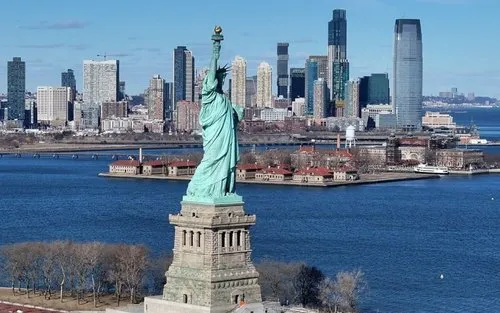
Scenario 1: The Manhattan Skyline Decoupling
A traveler wishes to view the Statue of Liberty and the Manhattan skyline without the 3-hour ferry queue and the noise of Liberty Island.
The Private Strategy: A private yacht charter departing from a secluded North Jersey marina, timed for the “blue hour” just after the public ferries have docked for the night.
-
Constraints: Maritime security zones around the Statue and unpredictable Hudson River currents.
-
Second-Order Effect: The yacht provides a stable, private platform for photography and discussion, removing the “jostling” effect of a public deck.
Scenario 2: The Southwest Backcountry Landing
Exploring the rock formations of the Navajo Nation or the Grand Staircase-Escalante.
-
The Private Strategy: Utilizing a specialized “bush plane” or helicopter with specific landing rights on private or tribal lands that offer rim-views of the National Parks.
-
Failure Mode: Sudden “monsoon” weather in late summer.
Planning, Cost, and Resource Dynamics
The economics of top-tier tours are defined by fixed costs (permits, fuel, pilot standby) rather than variable costs.
Table: Resource Allocation for Private Landmark Exploration (Estimated)
| Tier | Direct Costs (Per Day) | Typical Support Staff | Primary Value |
| Access-Level | $2,000 – $5,000 | 1 Lead Guide + Driver | Efficiency & Storytelling |
| Aviation-Level | $8,000 – $25,000 | Pilot + Ground Liaison | Speed & Unique Vantage |
| Institutional-Level | $30,000+ | Curators + Security + Expert | <span data-path-to-node=”38,3,3,0″>Total intellectual exclusivity |
Opportunity cost is the most ignored metric. If a senior executive spends 6 hours in a car to see Mount Rushmore, they have effectively “spent” $12,000 of their own billable time. A $5,000 private flight is, in this context, a cost-saving measure.
Tools, Strategies, and Support Systems
-
FBO (Fixed Base Operator) Networks: Avoiding commercial terminals is the first step in private exploration. Knowing the FBO landscape allows for a seamless “car-to-plane” transition.
-
Specialized CUA (Commercial Use Authorization) Holders: Not all guides can operate in National Parks. Using a guide with a long-term CUA ensures legal and ethical compliance.
-
Local “Fixers”: In regions like D.C. or the Southwest, these individuals manage the social capital required to unlock doors that don’t have a public “price” (e.g., private viewing of a museum vault).
-
Satellite Connectivity (Starlink/Garmin): Essential for remote Southwest or Alaskan landmarks to maintain the “safety umbilical” while remaining off the grid.
-
Private Security/Privacy Detail: For high-profile individuals, the tour must include a “countersurveillance” element to ensure the visit remains private and isn’t leaked to social media.
-
Medical Concierge: Ensuring that remote expeditions have “Level 1” medical evacuation protocols in place, a critical component often overlooked in luxury planning.
Risk Landscape and Failure Modes
Exclusivity does not mean immunity from risk; in some cases, it compounds it.
-
The Sanitization Risk: A tour can become so “managed” that the traveler loses all sense of the landmark’s true nature. A luxury safari in a private jeep on a paved road is a failure of curation.
-
Permit Volatility: Federal agencies can revoke special access with zero notice due to wildfire risk, government shutdowns, or VIP movements (e.g., a Presidential visit).
-
The “Social Leak”: If a “private” spot is tagged on social media, its exclusivity value drops to zero within a season. Maintenance of the “secret” is part of the service.
-
Environmental Compounding: A private boat tour of the Na Pali coast is more vulnerable to sea state than a large cruise ship. The traveler trades comfort for access, which carries a physical risk of fatigue or illness.
Governance, Maintenance, and Long-Term Adaptation
For organizations or families managing a portfolio of these experiences, a “governance” mindset is required.
-
Monitoring Cycles: Reviewing the “traffic density” of preferred landmarks every six months. If a site becomes too popular for the “Premium” crowd, it must be rotated out of the “Private” portfolio.
-
Adjustment Triggers: A change in park superintendents or a new land-use bill in Congress can alter access rights overnight.
-
Layered Checklist for Execution:
-
Verify original CUA or Landing Permit physical copy.
-
Check for current “Notices to Airmen” (NOTAMs) in the flight path.
-
Confirm guide’s specific domain expertise for the current season (e.g., nesting patterns or historical anniversaries).
-
Verify “Plan B” transport is fueled and on-call.
-
Measurement, Tracking, and Evaluation
How do you quantify the success of a private landmark tour?
-
Leading Indicators: Time spent in the “Planning Phase” (should be 3x the duration of the tour); number of redundant systems in place.
-
Lagging Indicators: Total time spent in public queues (Target: 0); cortisol levels/traveler stress; information retention from the expert.
-
Documentation Examples:
-
The Friction Audit: A post-trip log of every instance where the traveler had to wait or navigate an unmanaged crowd.
-
The Narrative Log: A record of unique information shared by the expert that is not available in digital archives.
-
Common Misconceptions and Oversimplifications
-
“VIP” means Exclusive: In many contexts, “VIP” is just a marketing label for a slightly faster line. True private exploration has no line at all.
-
Money buys federal law: You cannot pay a park ranger to let you climb on a monument. Access is governed by law, not just cash.
-
The more expensive, the better: A $50,000 trip with a mediocre guide is inferior to a $5,000 trip with a world-class historian.
-
Everything is on the internet: The best “fixers” don’t have websites. Their business is based on discretion and social capital.
-
National Parks are “off-limits” for private use: While they are public, the method of engagement can be highly specialized via CUAs and private land access.
Ethical and Practical Considerations
There is a growing tension between the desire for private access and the principles of “Public Trust.” Responsible operators of top private landmark tours united states mitigate this by contributing a portion of fees to conservation or by focusing on educational outcomes that benefit the landmark’s long-term preservation. Practically, this also ensures the viability of the service; a site that is damaged by high-end use will eventually be closed to all users.
Conclusion: Synthesis and Strategic Adaptability
The pursuit of the American landmark through a private lens is ultimately a pursuit of clarity. It is the desire to see the
national narrative without the distortion of the modern crowd.
True mastery of this domain involves recognizing that the landmark is not a backdrop for a photo, but a complex system to be understood. The private traveler is not one who sees the most, but one who sees with the greatest density of information and the least amount of systemic friction. In an increasingly crowded world, this logistical mastery is the final frontier of true exploration.