The American wilderness exists as both a physical reality and a psychological construct. For the discerning explorer, the act of entering these spaces is an exercise in managed vulnerability—a deliberate decoupling from the safety nets of the modern urban environment. In the United States, “wilderness” is not merely a descriptive term for unpeopled land; it is a specific legal and ecological designation, primarily codified by the Wilderness Act of 1964. This legislative framework mandates that these areas be “untrammeled by man,” creating a unique operational landscape for the best wilderness tours usa.
Engaging with these landscapes requires a transition from the role of a passive tourist to that of an active participant in an ecological narrative. High-tier wilderness travel is defined by its commitment to “deep access”—reaching the geographic and silence-saturated cores of the continent that remain invisible to the casual visitor. This is achieved through a sophisticated coordination of low-impact logistics, specialist guiding, and a rigorous adherence to the principles of self-reliance. To understand this domain is to recognize that true wilderness is not a site to be consumed, but a state of presence to be maintained through disciplined observation and strategic movement.
As the global travel industry leans toward “premiumization,” the wilderness sector remains one of the few areas where authenticity is enforced by the terrain itself. No amount of financial capital can alter the fundamental constraints of the Alaskan interior or the high-altitude deserts of the Great Basin. Consequently, the value of the most prestigious tours lies not in the luxury of the amenities, but in the quality of the “invisible infrastructure” that allows a human to exist safely and meaningfully in a space that is indifferent to their presence.
Best wilderness tours usa
The phrase best wilderness tours usa serves as a gateway to a diverse array of professional services designed to facilitate deep engagement with the most remote segments of the American landmass. However, a multi-perspective explanation must differentiate between “scenic tours” and true “wilderness immersion.” While the former prioritizes visual consumption from a stabilized platform, the latter requires the traveler to cross a threshold of environmental friction. This distinction is critical for setting expectations regarding physical exertion, psychological resilience, and the degree of isolation encountered.
A primary misunderstanding is the belief that a “wilderness tour” is a homogenized experience. In reality, the operational protocols for a winter wolf-tracking expedition in Yellowstone’s Lamar Valley differ fundamentally from a multi-day float through the Grand Canyon or a bush-plane drop-off in Alaska’s Brooks Range. Oversimplification risks lead travelers to underestimate the “sovereignty of nature”—the fact that in these zones, weather and geography dictate the schedule, not the itinerary. To pursue the best wilderness tours usa is to accept a loss of control in exchange for a gain in ecological perspective.
From a structural perspective, these tours are governed by the “Accessibility Paradox.” The very tools that allow us to reach the wilderness—helicopters, jet boats, and high-tech gear—can potentially degrade the “wilderness character” of the experience. Therefore, the top-tier of the industry is currently characterized by a shift toward non-motorized, low-density travel. The most sought-after experiences are those that utilize “stealth logistics”: small-group sizes, leave-no-trace encampments, and guides who possess a PhD-level understanding of local natural history.
Deep Contextual Background: The Evolution of the American Wild
The systemic evolution of wilderness travel in the U.S. began with a transition from fear to exploitation, and finally to preservation. In the 18th century, the wilderness was viewed as a “hideous and desolate” wasteland to be conquered. By the 19th century, the Romantic movement and the closure of the American frontier shifted the cultural lens, framing the wild as a source of national identity and spiritual renewal. This period saw the birth of the first national parks, yet these were initially managed as “pleasuring grounds” for the elite, characterized by high-impact infrastructure.
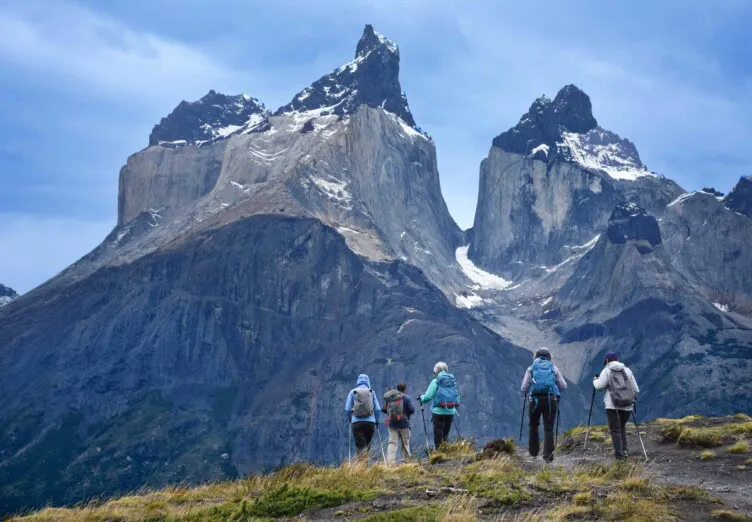
The pivotal shift occurred in 1964 with the passage of the Wilderness Act. This created a new tier of land management that prohibited permanent roads, structures, and motorized transport. For the travel industry, this mandated a return to primitive skills. The “Golden Age” of wilderness tours emerged in the 1970s and 80s, as specialized outfitters developed the equipment and logistical expertise to support long-duration expeditions without traditional support structures. Today, we are in the era of Bioregional Specialization, where tours are designed to highlight the specific ecological niche of a region, such as “tundra ecology” or “riparian corridors.”
Conceptual Frameworks and Mental Models
To navigate the complexity of remote travel, professionals use several mental models to filter and evaluate experiences:
-
The Threshold of Self-Reliance: This model assesses a tour by the distance (in time or geography) from emergency medical services. A “Level 1” tour is within the “Golden Hour” of a trauma center; a “Level 5” tour (typical of the Alaskan interior) might be three days from help.
-
The Ecological Footprint Ratio: A measure of the environmental cost of the experience. High-end wilderness travel seeks a “Net Zero” footprint, where the presence of the tour does not alter the long-term behavior of wildlife or the integrity of the soil.
-
The Trophic Level Engagement: This framework evaluates wildlife tours by which part of the food web they interact with. “Apex” tours (grizzly bears, wolves) carry different risk and ethical profiles than “Producer” or “Primary Consumer” tours (wildflowers, elk).
-
The Chronos vs. Kairos Model: In wilderness travel, Chronos (clock time) is largely irrelevant. Successful tours operate on Kairos (the opportune moment), where movement is dictated by the salmon run, the mountain pass thaw, or the movement of a storm front.
Key Categories of Wilderness Engagement
Wilderness travel in the U.S. is segmented by the primary mode of engagement and the specific environmental friction it addresses.
| Category | Primary Asset | Trade-off | Logistical Complexity |
| River Expeditions | Riparian Corridors | Limited lateral movement | High (Water/Permits) |
| Boreal/Arctic | Megafauna / Tundra | Extreme Weather Risk | Extreme (Aviation) |
| High Desert | Geological Silence | Water Scarcity | Moderate |
| Old Growth | Forest Density | Restricted Visibility | Low to Moderate |
| Alpine/Glacial | High Altitude | Physical Strain | High (Technical Gear) |
Decision Logic:
The choice between these categories should be driven by Sensory Priority. If the goal is auditory silence, the High Desert is superior. If the goal is visual complexity and wildlife density, Boreal/Arctic or River Expeditions offer the highest return on investment.
Detailed Real-World Scenarios
Scenario 1: The Brooks Range Drop-Off (Alaska)
A group is flown via DeHavilland Beaver into a remote lake in the Arctic National Wildlife Refuge (ANWR).
-
The Challenge: The group is 200 miles from the nearest road. The terrain is “tussock” tundra, where walking 2 miles takes 4 hours.
-
Decision Point: A grizzly bear is spotted 500 yards from the camp. Should the group move or maintain their position?
-
Failure Mode: Underestimating “Arctic time.” If the group tries to force a specific hiking mileage, they risk exhaustion and injury. The “Best” tour allows for “zero-days” to accommodate weather and wildlife.
Scenario 2: The Winter Lamar Valley (Yellowstone)
Tracking wolves in -20°F temperatures.
-
Constraints: Extreme cold limits battery life of cameras and physiological endurance of participants.
-
Second-Order Effect: The cold creates “atmospheric clarity” that allows for long-distance spotting of wolf packs that would be invisible in summer.
-
Success Indicator: Observation of a “predator-prey interaction” from a distance that does not alter the animals’ behavior.
Planning, Cost, and Resource Dynamics
The “Cost of Wilderness” is primarily a function of logistical redundancy and access permits.
Table: Resource Allocation for Wilderness Expeditions
| Tier | Direct Costs | Support Structure | Variable Factor |
| Front-Country | $300–$600 / day | Vehicle-based | Crowding |
| Remote Interior | $1,200–$2,500 / day | Float plane + Expert Guide | Weather |
| Extreme Expedition | $4,000+ / day | Satellite comms + Specialized Medics | Geographic Isolation |
Opportunity Cost:
The true cost of a wilderness tour is the “unplugged time.” In a hyper-connected economy, the 10 days spent without satellite internet or cellular signal is a significant professional investment. The best tours provide a high “Information Density” during this period to justify the disconnection.
Tools, Strategies, and Support Systems
-
Sat-Com Redundancy: Carrying both a Garmin inReach (text/tracking) and an Iridium satellite phone (voice) for emergency coordination.
-
Bear-Resistant Containers (BRCs): Not just a tool, but a mandatory protocol for maintaining “wilderness character” and wildlife safety.
-
Low-Impact Hygiene Systems: Utilizing specialized grey-water filtration and human-waste pack-out systems (WAG bags) in fragile alpine or desert zones.
-
Specialist Guides: Individuals with certifications from the Wilderness Medical Society (WFR/WEMT) and deep knowledge of ethology.
-
Multi-Layered Navigation: Relying on GPS/GLONASS while maintaining paper-map and compass competency as a primary fail-safe.
-
Aviation “Weather Windows”: The strategy of booking “buffer days” at the start and end of a bush-plane tour to account for the 30% probability of weather delays.
The Risk Landscape: A Taxonomy of Failure
In wilderness travel, “accidents” are rarely the result of a single catastrophic event. They are typically the result of a Failure Chain—a series of small, manageable errors that compound.
-
Environmental Compounding: A light rain leads to mild hypothermia, which leads to poor decision-making, which leads to a navigation error.
-
The “Expert Trap”: A guide or group leader becomes overconfident in a familiar terrain, missing subtle cues of a changing weather system or a developing geological hazard (e.g., flash flood potential).
-
Equipment Fragility: Relying on a single high-tech tool (like a digital map) without a mechanical backup.
-
Psychological Attrition: The “Third-Day Slump” where participants lose focus as the initial novelty of the wilderness wears off but the physical fatigue begins to set in.
Governance and Long-Term Adaptation
For the serious practitioner, the “maintenance” of wilderness skills is as important as the tour itself.
-
Review Cycles: Conduct a “Post-Action Report” (PAR) after every expedition to identify near-misses and equipment failures.
-
Monitoring Trends: Tracking the “visitor density” of specific wilderness units. If a “Best” tour location becomes popular on social media, its wilderness character is degraded, and it must be rotated out of the portfolio.
-
Checklist for Adaptive Management:
-
Verify current fire-restrictions for the specific ZIP code.
-
Audit guide certifications for expiration dates.
-
Assess “local knowledge” updates (e.g., have there been changes in bear behavior in the target valley?).
-
Measurement, Tracking, and Evaluation
How do you evaluate the success of the best wilderness tours usa?
-
Leading Indicators: Guide-to-participant ratio; percentage of “unscripted” time in the itinerary; quality of the pre-trip briefing.
-
Lagging Indicators: Ecological impact (Leave No Trace score); participant “narrative transformation” (qualitative feedback); wildlife sightings per unit of effort.
-
Documentation Examples:
-
The Species Log: A formal record of all flora and fauna encountered, contributed to citizen science databases.
-
The Geographic Log: A GPS-track that records the specific path taken (kept private to prevent trail-erosion).
-
Common Misconceptions and Systemic Myths
-
“Wilderness is dangerous”: Myth. Wilderness is consequential. It is indifferent. Danger arises from the mismatch between human behavior and environmental reality.
-
“More gear equals more safety”: Myth. Reliance on gear often masks a lack of skill. The best tours prioritize “soft skills” (judgment, navigation) over “hard gear.”
-
“National Parks are the only wilderness”: Myth. National Forests, BLM lands, and State Wilderness areas often offer higher levels of solitude and autonomy.
-
“Summer is the best time”: Myth. Shoulder seasons (Spring/Fall) and even Winter offer unique ecological insights and much higher levels of solitude.
-
“Wildlife viewing is guaranteed”: Myth. If a tour guarantees a sighting, it is likely utilizing “baiting” or “harassment” techniques, both of which are ethical failures.
Ethical and Practical Considerations
The ethics of wilderness travel are grounded in the Non-Interference Principle. This means that the goal of the tour is to pass through a landscape without the landscape knowing you were there. This extends to digital ethics: the practice of “Geotagging” remote locations is increasingly seen as a violation of the wilderness spirit, as it triggers a surge of high-impact traffic to fragile areas.
Conclusion: Synthesis and Judgment
The pursuit of the best wilderness tours usa is a pursuit of perspective. It is one of the few remaining ways to experience the “pre-modern” world, where the human ego is miniaturized by the scale of the landscape. Success in this domain is not measured by the summit reached or the photo taken, but by the degree to which the traveler has integrated the “wilderness ethic” into their own life.
As we move forward into an era of increasing ecological volatility, these spaces serve as “baseline” environments—places where we can observe how nature functions without human management. The wilderness tour, then, is more than a vacation; it is a critical engagement with the future of our planet. The most successful tours are those that leave the traveler with more questions than answers, and a profound respect for the silence of the American wild.