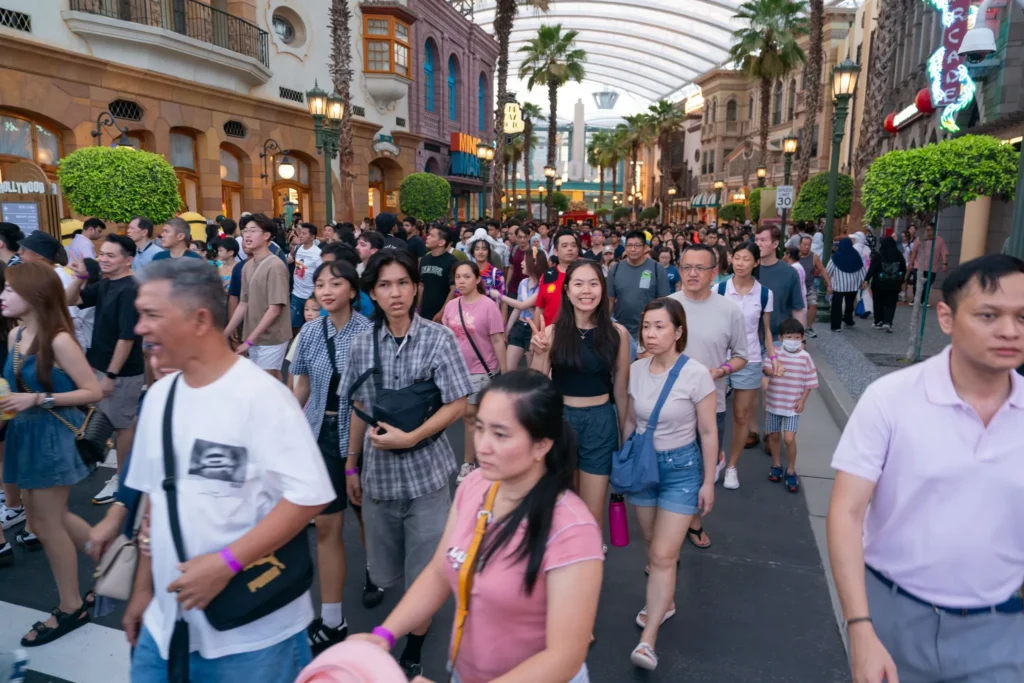
In the current global landscape, the concept of the “VIP” experience has undergone a fundamental structural transformation. No longer defined by the mere accumulation of luxury goods or the visibility of high-status consumption, the pinnacle of modern travel—what we might call the “High-Threshold Tier”—is centered on the acquisition of sovereignty over one’s own time, privacy, and environmental variables. As mass tourism reaches a saturation point in iconic global hubs, the discerning traveler seeks a systematic decoupling from the public friction of transit, queues, and unmanaged social density.
This evolution from “spectacle” to “intentionality” reflects a broader shift in the 2026 travel economy toward “Quiet Luxury.” In this paradigm, excellence is measured by the invisibility of the logistical effort. The most sophisticated top vip tour options are those that function as a secondary, silent operating system for the traveler, pre-emptively solving for bottlenecks before they manifest in the physical world. This requires an intricate coordination of private aviation, multi-jurisdictional permitting, and the deployment of “fixers” who possess the social and political capital required to unlock historically restricted assets.
To engage with this level of travel is to move beyond the role of a consumer and into the role of a curated investigator. Whether it is the privatization of a cultural landmark for a solo midnight viewing or the orchestration of a cross-continental “sportcation,” the objective remains the same: the restoration of the traveler’s agency. This article serves as a definitive reference for understanding the mechanics of these high-stakes engagements, providing a structural roadmap for those who view travel not as a leisure activity, but as a strategic investment in cognitive clarity and personal significance.
Top vip tour options
To accurately define top vip tour options in the 2026 market, one must distinguish between “Premium” and “Sovereign” access. A premium tour might offer a refined vehicle or a priority-line pass, but it remains fundamentally tethered to public schedules and infrastructure. In contrast, sovereign access involves the creation of a “private reality.” This is achieved through three primary pillars: temporal isolation (being in a space when the public is absent), jurisdictional immunity (accessing private or restricted lands), and intellectual scarcity (one-on-one engagement with a domain master rather than a general guide).
A primary misunderstanding is the belief that VIP status is a commodity that can be purchased via a standardized booking platform. In reality, the most significant options are “unlisted.” They are the result of long-standing relationships between boutique operators and institutional gatekeepers. For instance, a private viewing of the Vatican’s Restoration Room or a “behind-the-scenes” access to a Formula 1 paddock is a logistical achievement that requires months of diplomatic coordination. The risk of oversimplification is high: travelers often assume that a high price point guarantees a private experience, only to find themselves in “bottleneck zones” where their luxury vehicle is stuck in the same traffic as the general public.
The most resilient top vip tour options solve for this by “decoupling” the traveler from the public grid. This involves the use of Fixed Base Operators (FBOs) for aviation, private marinas for maritime transit, and “stealth logistics” that bypass visible security checkpoints. The goal is the total removal of friction. In a world characterized by “permacrisis” and digital noise, the ultimate luxury is the ability to move through the world without being perceived by the mass market, ensuring both physical safety and psychological peace.
Deep Contextual Background: The Evolution of Access
The history of VIP travel is a narrative of increasing privatization and the “Enclave Effect.” In the early 20th century, the “Private Rail Car” established the precedent that high-end travel was defined by the vessel of transport. This was the era of Atmospheric Luxury, where the interior of the car was a sanctuary, even as the world outside remained chaotic.
Following the democratization of flight in the 1960s, exclusivity moved to Geographical Isolation. This gave birth to the gated resorts of the Caribbean and the private hunting lodges of the Mountain West. However, as global wealth expanded, even these enclaves became crowded, leading to the “Resortification” of luxury—where the experience felt increasingly standardized and corporate.
Today, we are in the era of Access Orchestration. The barrier to entry is no longer just money; it is the complexity of the logistics. In 2026, the value has shifted toward “Low-Density Travel” and “Cognitive Wellness.” The modern VIP doesn’t just want a nice room; they want a 1,000-acre ranch for themselves, or a museum tour led by the lead archaeologist. The systemic focus has moved from the quality of the bed to the quality of the silence.
Conceptual Frameworks and Mental Models
To manage these high-stakes experiences, professional planners utilize several mental models:
-
The Friction-Coefficient Model: Evaluates a trip by the number of “unmanaged interactions” with public systems. A “Zero-Friction” experience means the traveler never touches a public door handle, stands in a queue, or navigates a public terminal.
-
The Information Density Ratio: Measures the value of a guide or expert. A top-tier tour should provide a density of unique, non-obvious information that far exceeds what is available through digital surrogates.
-
The Scarcity vs. Utility Matrix: Identifies the quadrant of “High Scarcity / High Utility.” A private tour of a NASA clean room is High/High. An expensive dinner at a popular restaurant is Low Scarcity / High Utility.
-
The Buffer Management Framework: Recognizes that high-end logistics are fragile. Planners must build “logistical slack” to account for weather, mechanical failure, or security-related site closures, ensuring the core asset engagement remains viable.
Key Categories and Operational Trade-offs
VIP travel is segmented by the primary constraint it seeks to overcome. Each category requires different logistical support.
| Category | Primary Asset | Trade-off | Logistical Barrier |
| Aviation-Centric | Temporal Priority | Weather Dependency | FAA/ATC Constraints |
| Institutional Access | Intellectual Depth | Rigid Time Windows | Security Protocols |
| Private Enclave | Spatial Sovereignty | Remoteness | Infrastructure Maintenance |
| Sportcation/Event | Proximity to Action | High Social Density | Crowd Management |
| Bioregional/Wilderness | Ecological Purity | Physical Strain | Medical Evacuation Risk |
Decision Logic:
When selecting among these, the traveler must decide between Observation (seeing a landmark from a private vantage) and Participation (engaging in an activity with an expert). Aviation-centric tours favor observation, while Institutional and Bioregional tours favor participation.
Detailed Real-World Scenarios
Scenario 1: The “Closed-Door” Louvre Experience
A traveler wants to view the Mona Lisa without the 20,000 daily visitors.
-
The VIP Strategy: Coordinating a “Night viewing” through the museum’s patron network, timed for the 2:00 AM maintenance window.
-
Constraints: Requires 6 months of lead time and a significant donation to the museum’s restoration fund.
-
Failure Mode: A sudden structural repair or security breach in a different wing can cancel the tour with no notice.
Scenario 2: The Alaskan Brooks Range Drop-Off
A multi-generational family seeks total isolation for a wellness retreat.
-
The VIP Strategy: Utilizing a private DeHavilland Beaver floatplane to reach a lake with no trail access, supported by a “pop-up” luxury camp with a private chef and medic.
-
Second-Order Effect: The absence of cellular signal triggers a “digital detox” that fosters deeper family connection than a standard resort stay.
Planning, Cost, and Resource Dynamics
The economics of top-tier travel are dominated by fixed costs—permits, fuel, and staff standby—rather than variable costs.
Table: Resource Allocation for High-Threshold Tours
| Tier | Direct Cost (Daily) | Primary Resource | Support Staff |
| High-Access | $5k – $15k | Local Permitting | Lead Guide + Driver |
| Sovereign | $25k – $60k | Private Aviation | Pilot + Ground Liaison |
| Full Enclave | $100k+ | Total Privacy | Estate Manager + Security |
Opportunity Cost:
The true cost is the “Recoverable Time.” For a senior executive, spending $20,000 on a private jet to save 8 hours of commercial transit is a cost-neutral or even profitable decision when measured against their billable value or cognitive recovery needs.
Tools, Strategies, and Support Systems
-
Fixed Base Operators (FBOs): Private terminals are the “checkpoints” of the VIP world, avoiding the TSA/Security bottleneck.
-
CUA (Commercial Use Authorizations): Specifically for US National Parks, identifying operators with long-term, non-public permits.
-
Local Fixers: Individuals with social capital in specific “gatekeeper” cities (Rome, D.C., Paris).
-
Satellite Connectivity (Starlink): Maintaining a “safety umbilical” in remote wilderness or maritime zones.
-
Executive Protection Details: Not just for safety, but for “spatial management” in public-adjacent areas.
-
Medical Concierge: On-call physicians who can coordinate a private med-evac from remote locations.
The Risk Landscape: Taxonomy of Failure
Exclusivity does not mean immunity from risk; it often introduces “High-Complexity Failure.”
-
The “Expert Trap”: A tour can be so reliant on one specific person (a curator or pilot) that their absence causes the entire itinerary to collapse.
-
Permit Volatility: Federal agencies can revoke special access with zero notice due to wildfire risk or geopolitical shifts.
-
The Social Leak: If a “private” spot is tagged on social media, its exclusivity value is permanently degraded.
-
Regulatory Risk: New visa integrity fees or bonding requirements (especially in the US market) can delay international arrivals for high-profile groups.
Governance, Maintenance, and Long-Term Adaptation
Maintaining authority in high-end travel requires a “Governance” mindset.
-
Monitoring Cycles: Reviewing the “traffic density” of preferred destinations every six months. If a site becomes too accessible to the “Premium” mass market, it must be removed from the “VIP” portfolio.
-
Adjustment Triggers: A change in land ownership or a new national security mandate can alter access overnight.
-
Layered Checklist for Execution:
-
Verify original CUA or Landing Permit physical copy.
-
Check for current “Notices to Airmen” (NOTAMs).
-
Confirm “Plan B” transport is fueled and on-call.
-
Verify guide’s domain expertise for the current season.
-
Measurement, Tracking, and Evaluation
Success in this tier is measured by “Negative Signals”—the events that didn’t occur.
-
Leading Indicators: Time spent in the “Planning Phase” (should be 4x the trip duration); number of redundant systems.
-
Lagging Indicators: Total minutes spent in a public queue (Target: 0); cortisol/stress levels of the traveler; depth of memory retention.
Documentation Examples:
-
The Friction Audit: A post-trip log of every instance where the traveler had to wait or navigate an unmanaged crowd.
-
The Information Log: A record of unique data shared by the expert that is not in the public record.
Common Misconceptions and Systemic Myths
-
“Money buys everything”: Myth. Federal land regulations and weather are indifferent to wealth. Strategy and relationships buy access.
-
“Luxury resorts are the pinnacle”: Myth. A resort is still a communal space. A private cabin on 10,000 acres is the true peak.
-
“Everything is on the internet”: Myth. The best options are protected by those who own them to prevent the “Instagram Effect.”
-
“The more expensive, the better”: Myth. A high-priced trip with a mediocre guide is a failure of curation.
-
“VIP means ‘Expensive Seats'”: Myth. VIP means you are not in a seat at all; you are where there are no seats.
Ethical and Practical Considerations
High-end travel exists in tension with the “Public Trust” doctrine. Responsible operators mitigate this by contributing to conservation or restoration funds. Practically, this also ensures the viability of the service; a site that is damaged by high-end use will eventually be closed to all, including the VIP. The ethical focus should be on “Silent Patronage”—supporting the asset while leaving no physical or social trace of the visit.
Conclusion: Synthesis and Strategic Adaptability
The pursuit of top vip tour options is ultimately a pursuit of clarity. It is the desire to see the world without the distortion of the modern crowd. Success in this domain requires a blend of logistical science and artistic curation. The private traveler is not one who sees the most, but one who sees with the greatest density of information and the least amount of systemic friction. In an increasingly crowded world, this logistical mastery is the final frontier of true exploration.