The concept of sightseeing in the United States has undergone a fundamental transformation, moving from the mass-market bus tours of the twentieth century toward a highly fragmented landscape of specialized access. While the geographic landmarks—the Grand Canyon, the monuments of Washington D.C., the rugged coastlines of the Pacific Northwest—remain constant, the methods by which they are experienced have diverged into two distinct realities. One is characterized by high-volume, standardized observation; the other is defined by logistical precision, privacy, and the removal of systemic friction.
This shift toward exclusivity is not merely a matter of luxury or aesthetics; it is an architectural response to the increasing congestion of public landmarks. As national parks and urban centers reach capacity limits, the ability to engage with these spaces without the interference of crowds has become a rare commodity. True exclusivity in the American context is often synonymous with “time-shifting” or “spatial decoupling”—the ability to be in a location when others are not, or to access vantage points that are physically or legally unreachable by the general public.
To analyze the state of exclusive sightseeing is to understand the interplay between federal land management, private aviation, and the curation of intellectual expertise. It requires a move away from the “bucket list” mentality and toward a model of immersive inquiry. This article serves as a definitive examination of how these high-level experiences are structured, the frameworks required to evaluate them, and the logistical realities that govern the upper tiers of American travel.
Exclusive sight seeing tours america
Defining exclusive sight seeing tours america requires distinguishing between “expensive” and “exclusive.” Many travel offerings carry a high price tag due to luxury amenities—plush seating or gourmet catering—but remain fundamentally public in their route and timing. True exclusivity is dictated by the scarcity of the access itself. This might manifest as a private, after-hours tour of the National Archives, a helicopter landing on a private ranch in the Moab desert, or a guided expedition led by a former director of a major national museum.
A common misunderstanding is that exclusivity is purely a social signal. From a logistical perspective, however, it is a method of risk mitigation. For the high-stakes traveler, the “long waiting line” or the “unpredictable crowd” is a variable that introduces systemic failure into a tight schedule. Exclusive tours solve for this by creating a controlled environment. The risk of oversimplification here is significant: one might assume that booking a private guide is sufficient to guarantee an exclusive experience, but without the underlying permits, “after-hours” agreements, or proprietary transport, the experience remains subject to the same bottlenecks as mass-market tourism.
Furthermore, the American landscape presents unique challenges to exclusivity compared to Europe or Asia. Much of the most desirable sightseeing is located on federal land managed by the National Park Service (NPS) or the Bureau of Land Management (BLM). These agencies operate under a mandate of public access, making “private” use of public space a complex legal and ethical maneuver. Therefore, the architecture of exclusive sightseeing in America often relies on “neighboring rights”—using private land adjacent to public landmarks to provide a view or an experience that feels isolated while remaining legal and sustainable.
Historical Evolution of High-Access Travel
The lineage of exclusive American sightseeing can be traced back to the “Great Northern Railway” era, where wealthy industrialists traveled in private rail cars to the first national parks. These individuals did not just visit the parks; they funded the infrastructure that made them accessible. This established a precedent where high-level access was linked to the development of the destination itself.
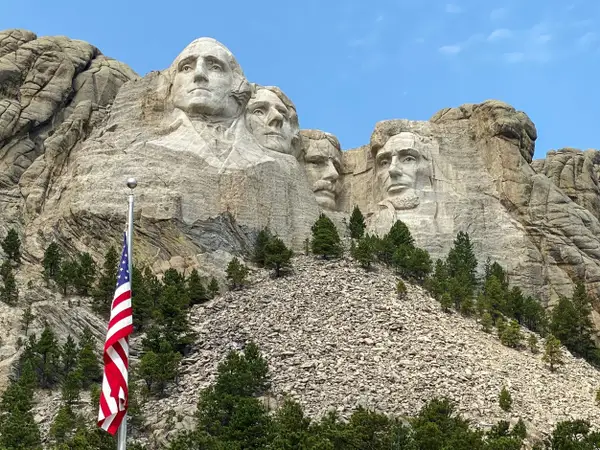
Following the mid-century rise of the automobile and the subsequent democratization of the “Road Trip,” exclusivity retreated into the realm of private aviation and gated estates. The 1980s and 90s saw the birth of the “Adventure Travel” movement, which began to professionalize the role of the expert guide. No longer was a guide just a navigator; they became a scholar, often holding advanced degrees in geology, history, or ecology.
In the current decade, the evolution has moved toward “Hyper-Personalization.” The integration of digital logistics allows for the real-time adjustment of itineraries based on weather, light quality, or local events. This has moved exclusive sightseeing away from a fixed “itinerary” and toward a “fluid experience,” where the goal is to optimize the traveler’s engagement with the landscape at any given moment.
Conceptual Frameworks and Mental Models
To evaluate the validity of an exclusive experience, one should utilize several mental models:
-
The Zero-Crowd Variable: This framework evaluates a tour by the probability of encountering third parties. If the probability is higher than 5%, the experience is “premium” but not “exclusive.”
-
The Expert-to-Asset Ratio: In this model, the value of the tour is measured by the depth of the guide’s knowledge relative to the physical asset being viewed. A world-class view with a mediocre narrator is a wasted logistical effort.
-
The Frictionless Path (FP): This measures the number of “touchpoints” where the traveler must interact with public infrastructure. Exclusivity aims to minimize FP, creating a seamless transition from private transport to the sightseeing asset.
-
The Geographic Monopoly: This applies to experiences that take place on private land with unique views of public landmarks. The “monopoly” on that specific vantage point is the primary driver of value.
Key Categories and Operational Trade-offs
Exclusive sightseeing in America generally falls into several distinct operational categories, each with its own set of constraints.
| Category | Primary Asset | Trade-off | Logistical Complexity |
| Aerial Expeditions | Remote vistas (Grand Canyon, Alaska) | Weather dependency | High (Aviation regs) |
| After-Hours Access | Museums, Monuments, Landmarks | Limited time windows | Extreme (Bureaucracy) |
| Private Land Access | Ranch lands, private islands | High cost of entry | Low (Managed by owner) |
| Academic/Expert Guided | Intellectual depth, site history | Requires advanced booking | Moderate |
| Subsurface/Specialty | Caves, private mines, vaults | Physical requirements | High (Safety/Insurance) |
Decision Logic:
When selecting among these categories, the traveler must decide if their priority is Visual Scarcity (seeing what others can’t see) or Intellectual Scarcity (understanding what others don’t understand). Aerial tours optimize for the former, while expert-guided urban tours optimize for the latter.
Detailed Real-World Scenarios
Scenario 1: The Canyon Landing
A group seeks an exclusive view of the Southwest. Rather than the public overlooks, they utilize a private helicopter tour with landing rights on Hualapai land.
-
Decision Point: Landing on the rim vs. landing on the floor. The floor landing offers unique geology but is subject to stricter environmental noise regulations.
-
Failure Mode: High winds. If the flight is grounded, the “exclusive” nature of the trip vanishes unless a ground-based private ranch alternative was pre-arranged.
Scenario 2: The Smithsonian After-Hours
An organization requests a private viewing of the Hope Diamond or the Wright Flyer.
-
Constraint: Federal security protocols.
-
Second-Order Effect: The logistical need for specialized lighting and security staff can exceed the cost of the tour itself.
Planning, Cost, and Resource Dynamics
The financial structure of exclusive sight seeing tours america is rarely transparent, as it often involves “bespoke” pricing based on specific permits or seasonal availability.
Table: Range-Based Cost Dynamics (Per Day)
| Expense Tier | Typical Offering | Direct Cost (Est.) | Value Driver |
| Tier 1: High-Access | Private SUV, Expert Guide | $1,500 – $3,000 | Deep local knowledge |
| Tier 2: Aerial/Remote | Charter Heli, Backcountry | $5,000 – $15,000 | Speed and vantage |
| Tier 3: Institutional | Private Museum/Federal Site | $20,000+ | Rare legal permissions |
Opportunity Cost:
The true cost of a failed exclusive tour is not the refund; it is the “lost window.” Many of these sites have optimal “golden hour” lighting or seasonal biological events (like wildlife migrations). Missing the window due to a logistical oversight is a total loss of the asset’s value.
Tools, Strategies, and Support Systems
-
Fixed Base Operators (FBOs): The primary hubs for exclusive travel. Avoiding commercial terminals is the first step in maintaining the “exclusivity bubble.”
-
Specialized Permit Expeditors: Professionals who manage the complex paperwork for NPS or BLM commercial filming/touring permits.
-
Local “Fixers”: Individuals with deep social ties to landowning families or indigenous communities who can negotiate access that doesn’t appear on any website.
-
Satellite Communication (Garmin/Starlink): Essential for remote expeditions to maintain the “safety umbilical” while remaining off the grid.
-
Private Security/Privacy Details: For high-profile individuals, the tour must include a “countersurveillance” element to ensure the sightseeing remains private.
Risk Landscape and Failure Modes
Exclusivity introduces unique risks. The most common is the “Sanitization Risk”—where the experience becomes so managed and polished that it loses its authentic connection to the landscape.
-
Permit Volatility: Federal or state agencies can revoke special access permits with little notice due to fire risks or political shifts.
-
Weather Compounding: A private boat tour of the Na Pali coast is more vulnerable to weather than a large cruise ship; the smaller vessel lacks the stabilization, making the “exclusive” experience physically grueling in rough seas.
-
The “Celebrity” Bottleneck: In famous locations, even private tours can be spotted by the public, leading to an “audience effect” that destroys the sense of isolation.
Governance and Long-Term Adaptation
Maintaining the quality of exclusive sight seeing tours america requires a “review and adjust” cycle.
-
Monitoring Scarcity: If a “private” spot becomes popular on social media, it is no longer exclusive. Managers must constantly scout new, unmapped locations.
-
Sustainability Compliance: High-level tours are under greater scrutiny for environmental impact. Adaptation involves moving toward electric VTOLs (Vertical Take-Off and Landing) or zero-trace camping.
-
The Layered Checklist:
-
Verify permit status 48 hours prior.
-
Check guide credentials/specialty match.
-
Confirm private transport “handoff” points.
-
Verify weather-contingency “Plan B” sites.
-
Measurement, Tracking, and Evaluation
How do you quantify the success of an exclusive tour?
-
Quantitative: “Ambient Human Count”: The average number of non-party individuals visible during the experience. (Target: < 5).
-
Qualitative: “Information Density”: The volume of unique, non-Googlable insights provided by the guide.
-
Lagging Indicator: “Asset Persistence”: Did the experience change the traveler’s perspective of the American landscape, or was it merely a visual consumption?
Common Misconceptions and Myths
-
Myth: “VIP” at a theme park is exclusive sightseeing. Correction: It is priority queueing in a public space. It does not offer a unique vantage point of a natural or historical asset.
-
Myth: You can’t have a private tour of a National Park. Correction: You can, but it requires a Commercial Use Authorization (CUA) and often involves staying in private enclaves within or adjacent to the park.
-
Myth: More expensive always means more exclusive. Correction: A $50,000 hotel suite is just a room; a $5,000 day with a geologist in a restricted-access canyon is “exclusive.”
Ethical and Practical Considerations
There is a growing tension between the desire for exclusive access and the principles of “Public Trust” regarding American lands. Exclusive tours must navigate the ethics of “closing” public spaces for private gain. Responsible operators mitigate this by contributing a portion of fees to conservation or by focusing on educational outcomes that benefit the site’s long-term preservation.
Synthesis: The Future of the American Expedition
The future of exclusive sight seeing tours america lies in the integration of technology and silence. As the world becomes noisier and more connected, the ultimate luxury is the “offline” encounter with the sublime. This requires more than just money; it requires a sophisticated understanding of the American geography and the bureaucratic systems that protect it.
True mastery of this domain involves recognizing that the landscape is not a backdrop for a photo, but a complex system to be understood. The “exclusive” traveler is not one who sees the most, but one who sees with the greatest clarity, unburdened by the friction of the masses.